Radio Bulgaria


Author
Ivo Ivanov
Article
“Heroes of Shipka” – a cinematic history that bears witness to two eras
How a film dedicated to Bulgaria’s liberation in 1878 won the Best Director award in Cannes
Tuesday 3 March 2026 12:05
Tuesday, 3 March 2026, 12:05
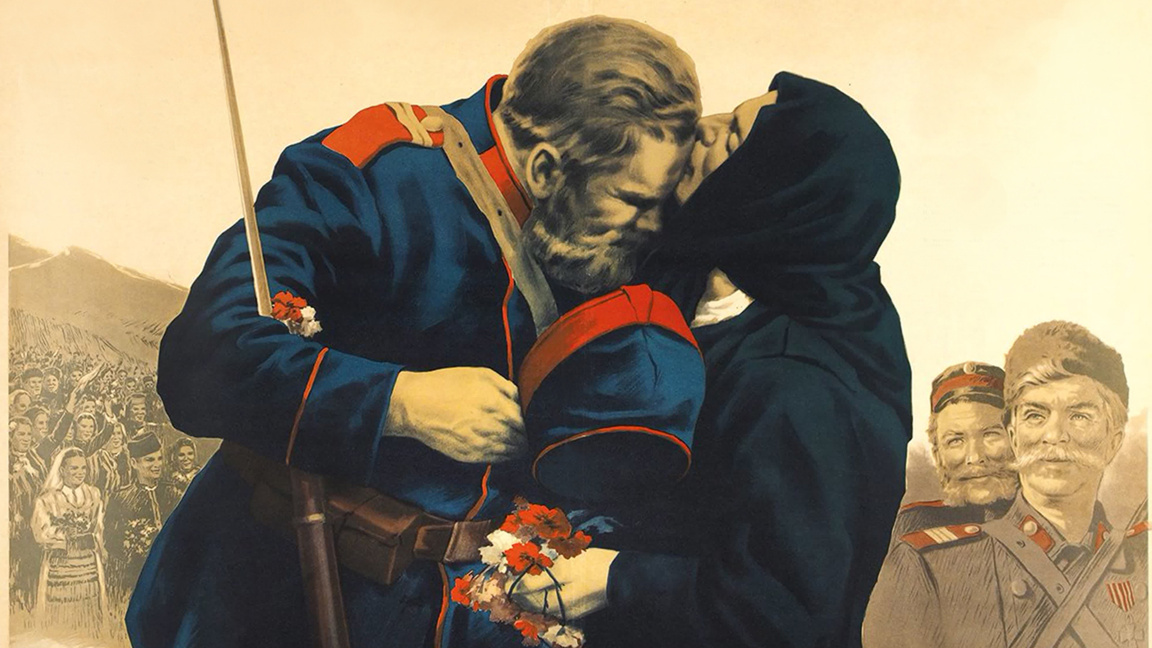
PHOTO Archive
Font size
The Russo-Turkish War of 1877-78 ended on March 3 with the signing of the Treaty of San Stefano. After five centuries of Ottoman rule, Bulgarian statehood re-emerged. However, with the Treaty of Berlin in 1878, it was severely curtailed, and the Bulgarian national community was permanently divided. During the Cold War, Bulgarian cinema - guided by Soviet cinematography - returned to this theme.
Every film, even one devoted to the historical past, is also a document of its own time. The unique monograph by Assoc. Prof. Mariana Piskova from the South-West University in the town of Blagoevgrad on the making of the film “The Heroes of Shipka” confirms this rule.
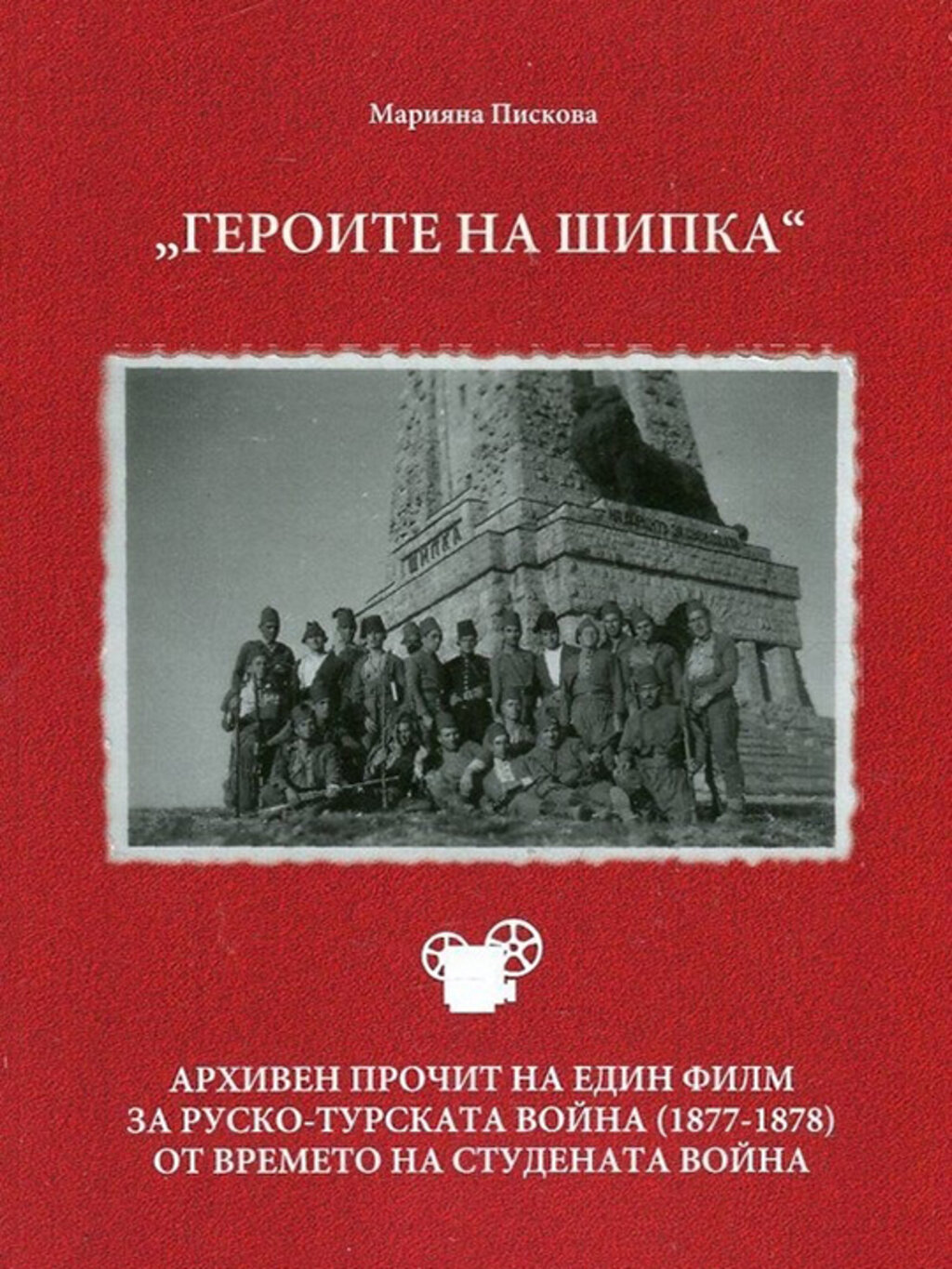
Mariana Piskova's monograph on the film "Heroes of Shipka"
PHOTO Mariana Piskova's private archive
As part of an international project examining the politics of memory surrounding the Russo-Turkish War of 1877-78, Mariana Piskova opens the archives of the large-scale Bulgarian-Soviet film production created more than 70 years ago.
The feature "Heroes of Shipka" (1955) is probably the most monumental battle film ever shot in Bulgaria. The work stands out for its exceptional dramatic intensity, even though it was created in a very difficult period, when quality did not depend on quantity. Everything begins with the script, and here it is particularly striking that both the screenwriter and the director were descendants of direct participants in the Russo-Turkish War. When Soviet film director Sergei Vasilyev first came to Bulgaria, he showed special interest in the monuments preserving the memory of the historic events.
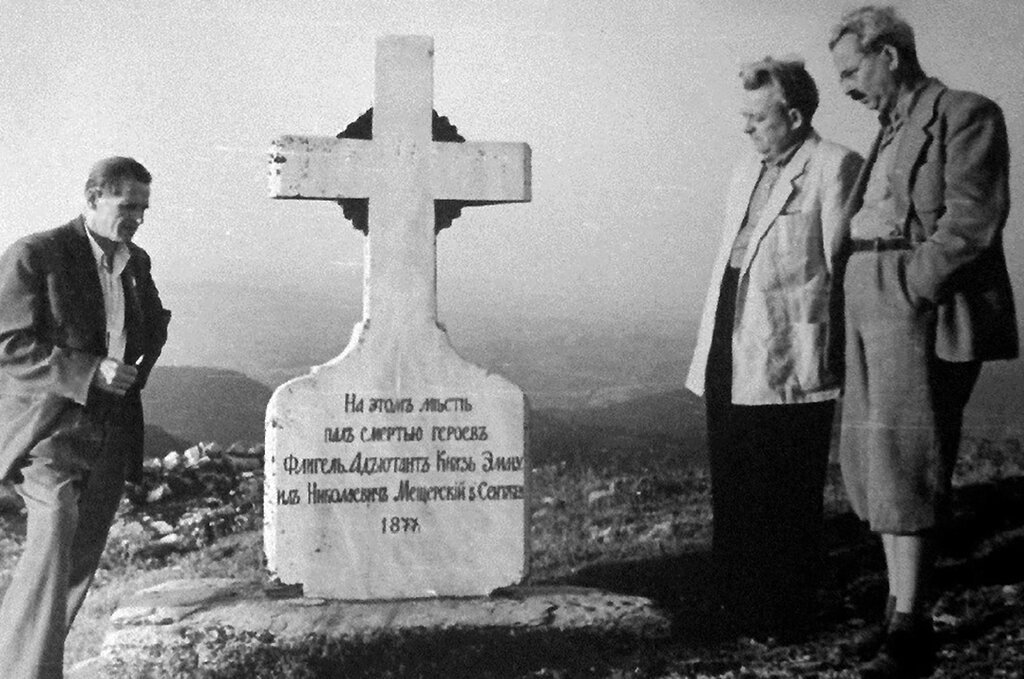
Sergei Vasilyiev (first from the left) in front of the monument to Prince Emnanuel Nikolaevich Meshchersky, who died on Mount St. Nicholas (Shipka peak) on September 5, 1877
PHOTO Mariana Piskova's private archive
Cinematographer Sergei Vasilyev was one of the creators of the iconic 1934 Soviet action film 'Chapaev'. Under a 1948 agreement between Sofia and Moscow, in 1952 Vasilyev was appointed artistic director of Bulgarian cinematography. The goal was to produce a Bulgarian film with Soviet specialists who would “teach the Bulgarians how to make socialist cinema.”
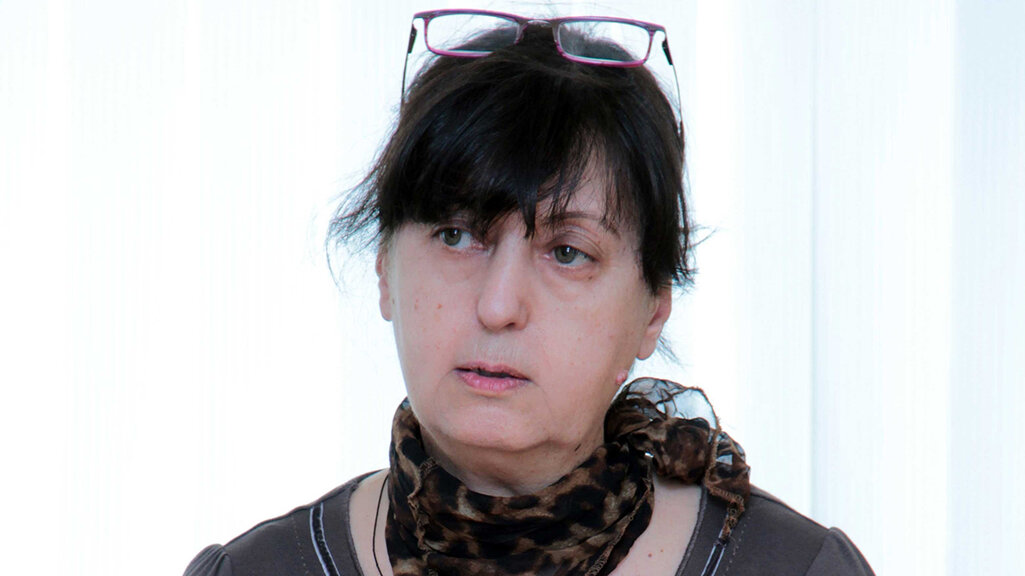
Assoc. Prof. Mariana Piskova
PHOTO Mariana Piskova's private archive
“Everything begins with the script - first the literary script, and then the director’s script,” Assoc. Prof. Piskova told Radio Bulgaria. “The literary script, or original version, was written by Arkady Perventsev - a Soviet writer and Stalin Prize laureate at the time. His grandfather was a participant in the war, so he had an emotional connection to the subject. The father of director Sergei Vasilyev also fought on the Balkan front. Moreover, Sergei Vasilyev’s childhood passed in the military archive in Moscow, on Balmanskaya Street, where his father worked as an archivist. So he knew other war participants firsthand and was deeply emotionally connected to the topic.”
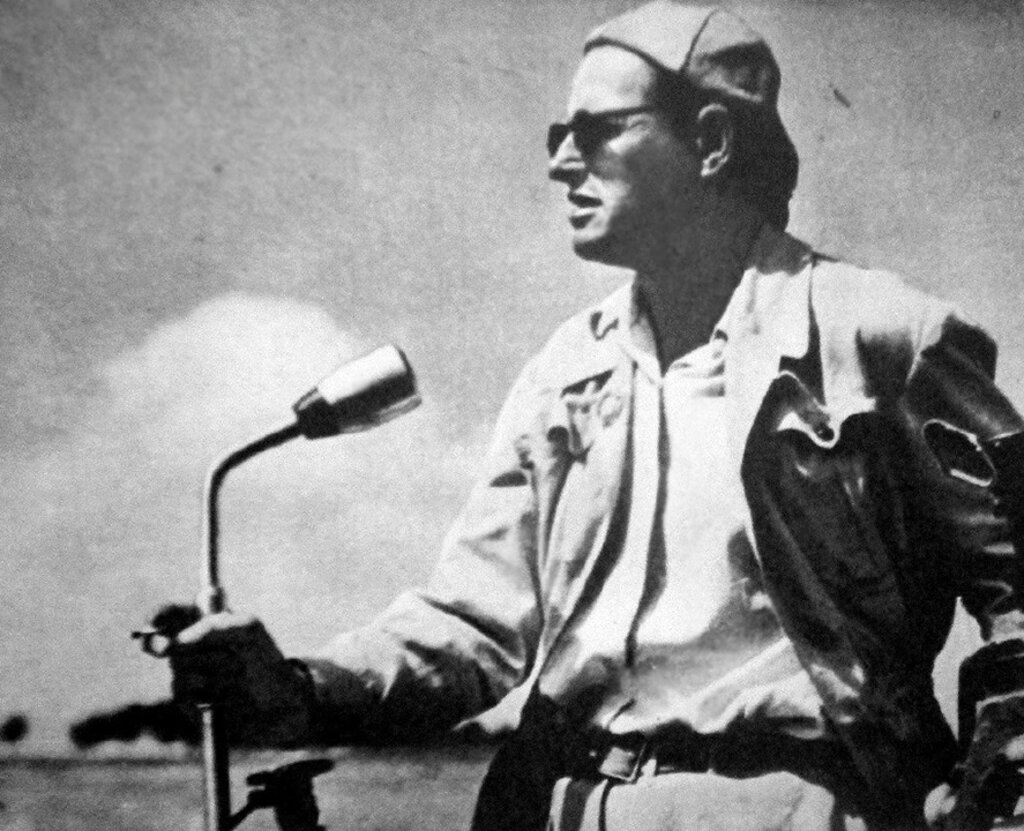
Sergei Vasilyev on the film set
PHOTO Mariana Piskova's private archive
The main aim of the production was to impose among audiences the ideological thesis of the then-ruling Communist Party - that Russia, and respectively its reborn Comintern-style imperialism in the USSR, were Bulgaria’s double liberators: first in 1878 from Ottoman rule, and then in 1944 when the Red Army “liberated” the country from “fascist oppression.” The film ends with a symbolic propaganda scene showing Marshal Fyodor Tolbukhin, commander of the Third Ukrainian Front, ascending the legendary peak St. Nicholas (known as Shipka Peak) with his troops. In fact, this was the first scene shot, in March 1953.
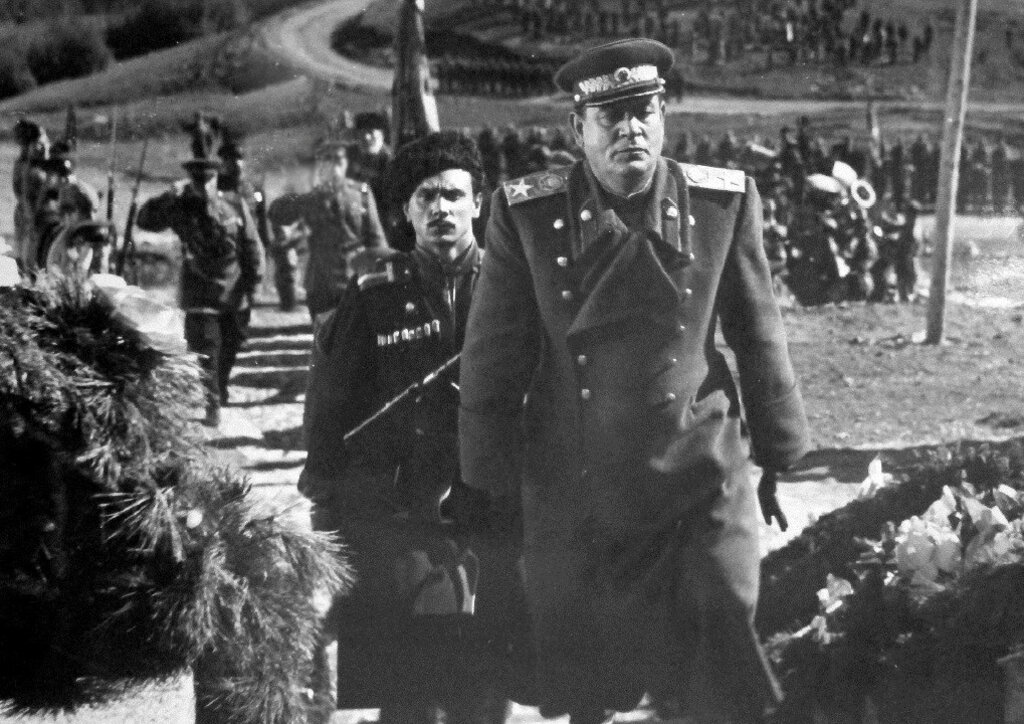
The film's closing scenes. Asparuh Temelkos is playing the role of Marshal Fyodor Tolbukhin
PHOTO Mariana Piskova's private archive
“On May 20, 1953, the first Soviet crew members arrived. Moreover, they brought editing and technical documentation that no one in Bulgaria had seen before. According to these documents, 7,000 participants were planned for the mass scenes. Until then, Bulgaria had prepared 2,700 soldiers. The difference was enormous - and impossible to organize in just a day or two.”
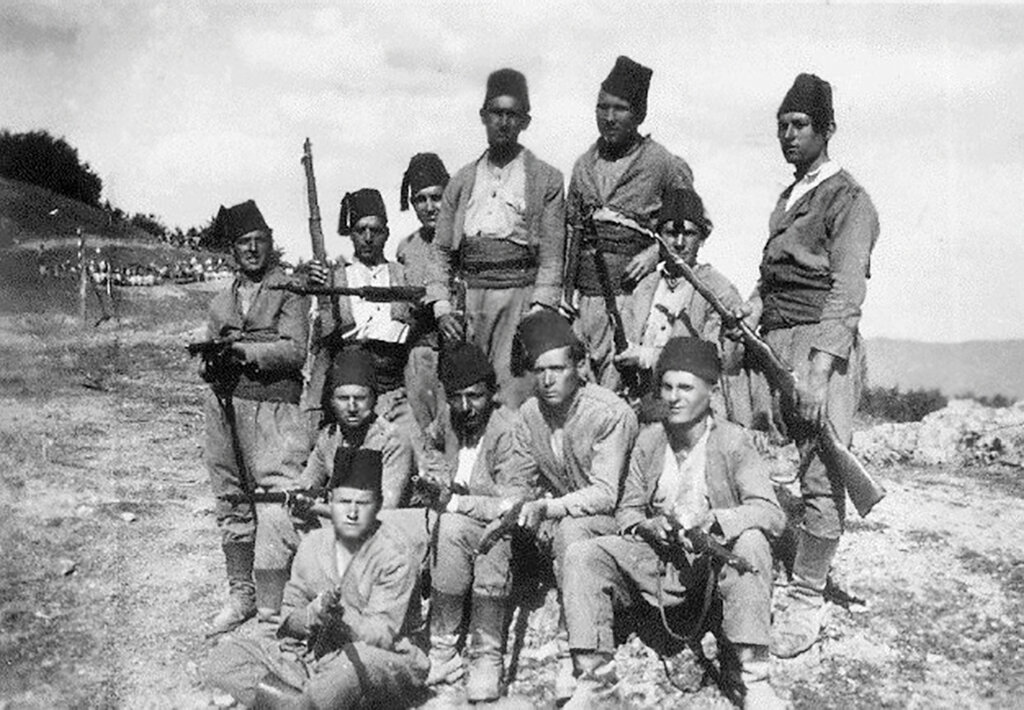
Soldiers from a unit in Kazanlak during the filming at Shipka
PHOTO Mariana Piskova's private archive
The controversy of “The Heroes of Shipka” was embedded in the script itself: there is no single main character, because in the spirit of socialist realism “the people are the hero.” To create some dramatic tension - and to avoid presenting Imperial Russia as the sole protagonist - an opposition was devised between certain Tsarist generals and the Russian High Command, represented by the emperor’s brother, Prince Nikolai Nikolaevich.
“From the outset, the film was intended to draw a parallel with the other war - the Second World War - and with our ‘liberation from fascist oppression,’” the researcher explains. “Perhaps individual heroes were not needed - that was the emphasis. But I must add that in this film General Skobelev is, for the first time, given greater prominence. Until then, he had not been portrayed in such a light or with such importance.”Thus, Sergei Vasilyev succeeds, to some extent, in bringing this figure into the spotlight (Mikhail Skobelev was one of the generals who led key events during the war - the winter crossing of the Balkan Mountains, the siege of the town of Pleven, the capture of Lovech, and the victory at Sheynovo, which is why his soldiers used to say, “Where Skobelev is, there is victory” – ed. note).
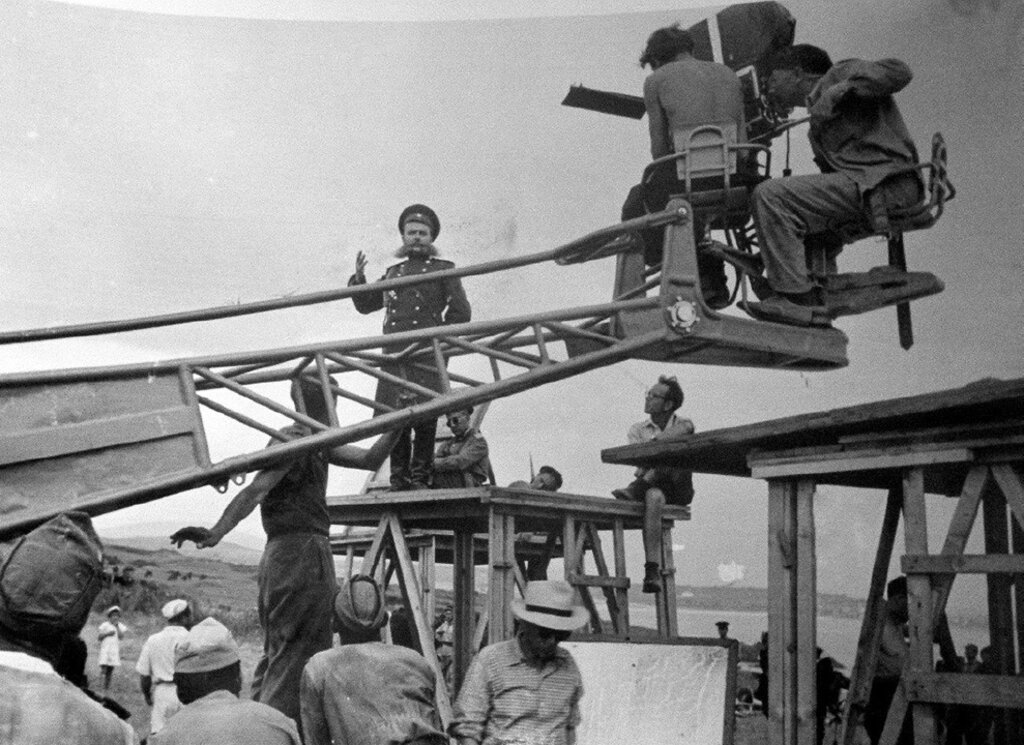
During the filming
PHOTO Mariana Piskova's private archive
In times before CGI (Computer-Generated Imagery), when film tricks were limited to models and painted glass effects, Sergei Vasilyev created monumental battle scenes. They are captivating not only for their scale but also for their stunts and realism. The footage literally recreates iconic paintings by artists who participated in the war.
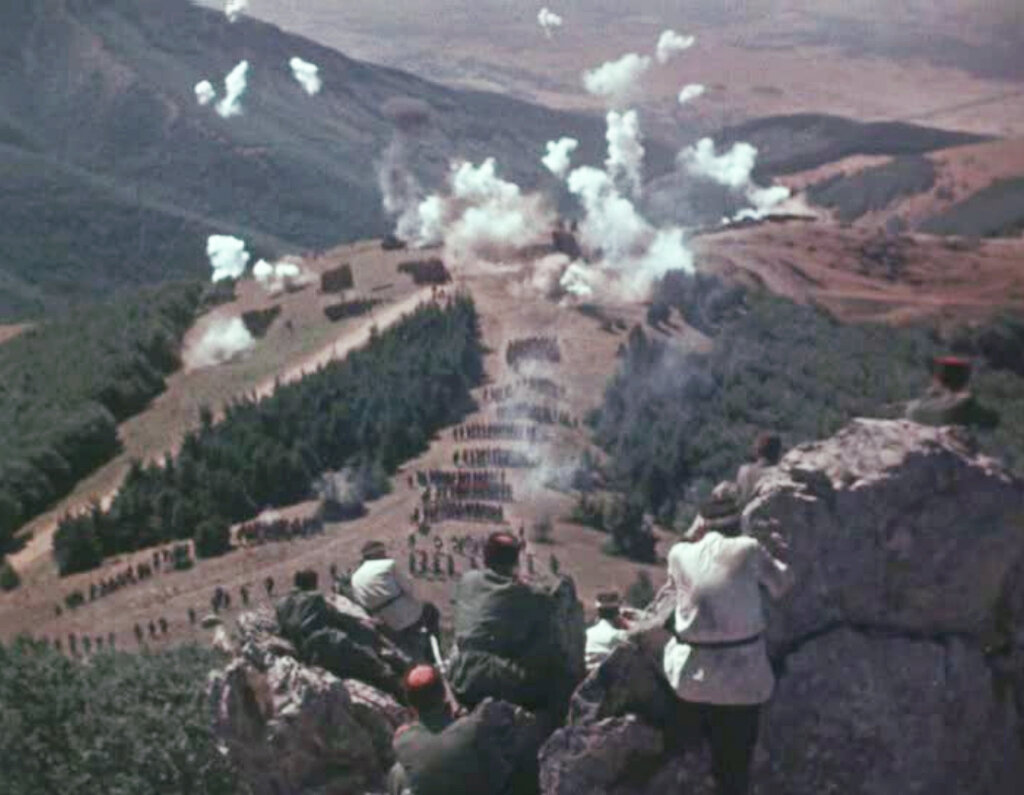
Scene from the film
PHOTO Archive
Tragically, there were even real casualties among crew members and extras during filming.
Bulgaria, which financed the production with the unprecedented sum of 16 million leva, allowed Vasilyev to work on a grand scale. He filmed at authentic battle locations and during the same seasons in which the historical events took place. The crossing of the Danube, the siege of Pleven, the battles at Shipka pass, and the winter crossing of the Balkan Mountains became emblematic scenes - later quoted in numerous film and television productions dedicated to the Russo-Turkish War of Liberation for the Bulgarians.
The artistic merits of Heroes of Shipka, along with the political climate of the time, led to the film receiving the Best Director award at the Cannes Film Festival in 1955.
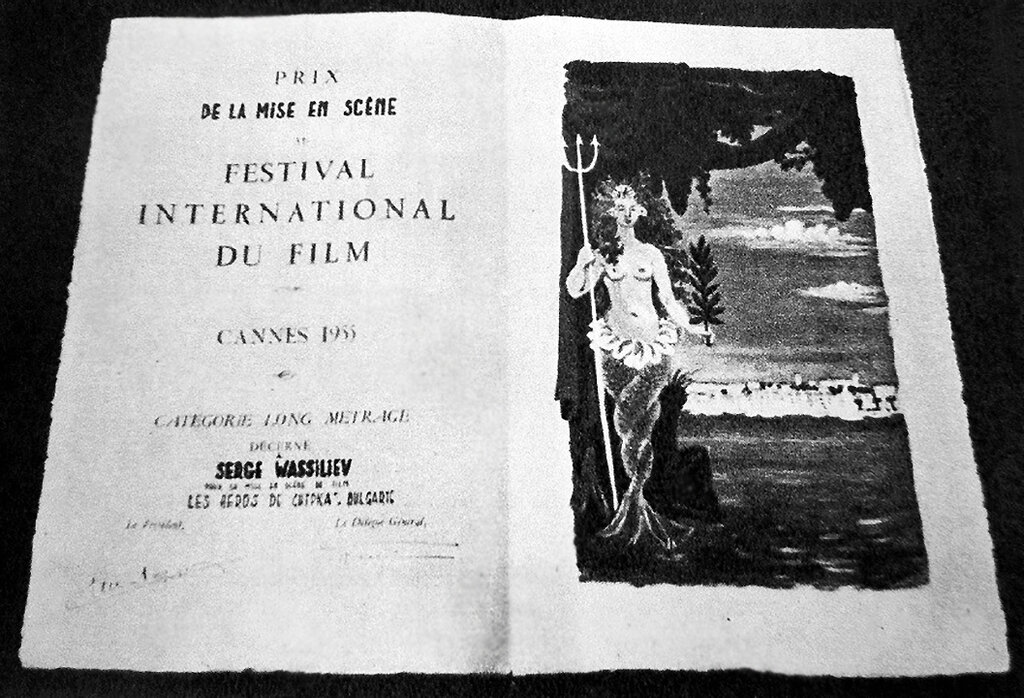
The award from Cannes Festival for film direction in 1955
PHOTO Mariana Piskova's private archive
“I included a photo from the award ceremony at the end of my book,” emphasizes Assoc. Prof. Mariana Piskova. “There are not many illustrations, but this one is very telling. Sergei Vasilyev receives the award for directing the Bulgarian film ‘Heroes of Shipka.’”
Read also:
Photographic icons from the Russo-Turkish War of 1877-1878
The liberation of Bulgaria through the lens of Carol Szathmari
English: R. Petkova
This publication was created by: Rositsa Petkova