Radio Bulgaria


Friday 6 March 2026 12:06
Friday, 6 March 2026, 12:06
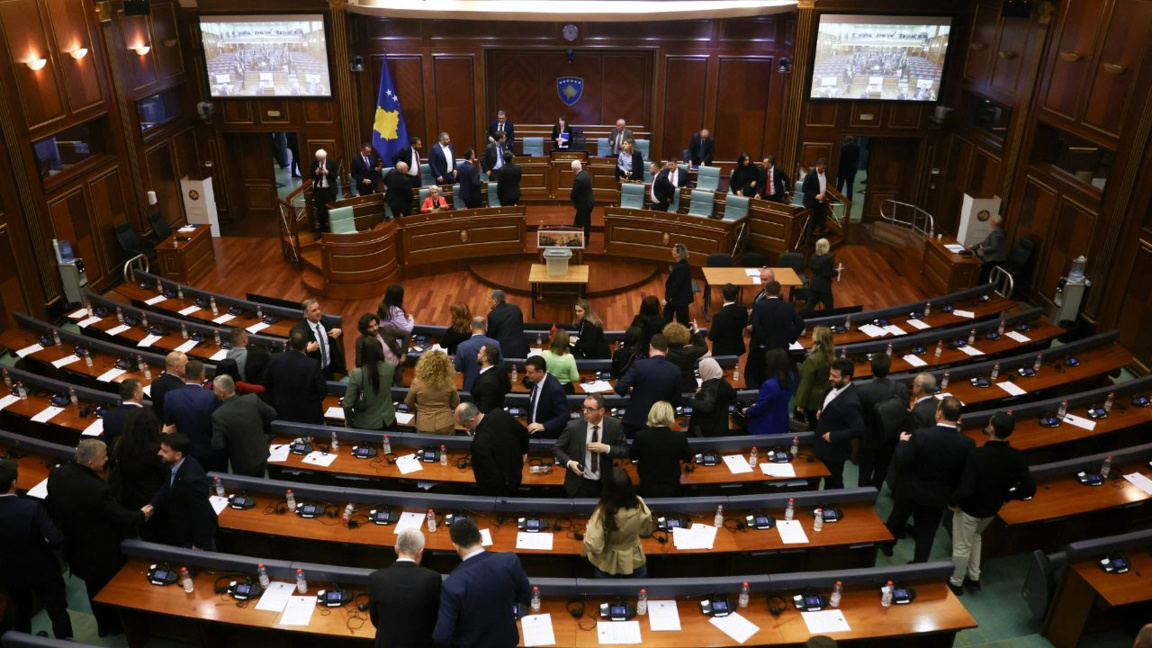
PHOTO Reuters
Font size
Kosovo’s parliament fails to elect president
Kosovo’s parliament failed to elect a new president by the March 5 deadline, even though the term of the current head of state, Vjosa Osmani, expires on April 4. Initially, the only candidate was Deputy Premier and Minister of Foreign Affairs Glauk Konjufca, nominated by the ruling Vetëvendosje movement of Prime Minister Albin Kurti. However, the law requires at least two candidates to start the procedure, reported the Kosovo edition of Radio Free Europe.
Vjosa Osmani proposed constitutional changes to allow the president to be elected by popular vote rather than by parliament, as is currently required. The proposal was rejected by MPs. The ruling party decided to nominate a second candidate, Fatmire Kollçaku, but the opposition walked out, and the session was adjourned due to a lack of quorum.
Parliament Speaker Albulena Haxhiu announced that she has requested the Constitutional Court to temporarily suspend the deadlines for electing a new president. If MPs fail to elect a head of state within 60 days, the country could move to direct presidential elections.
Mustafa Çiftçi
PHOTO Reuters
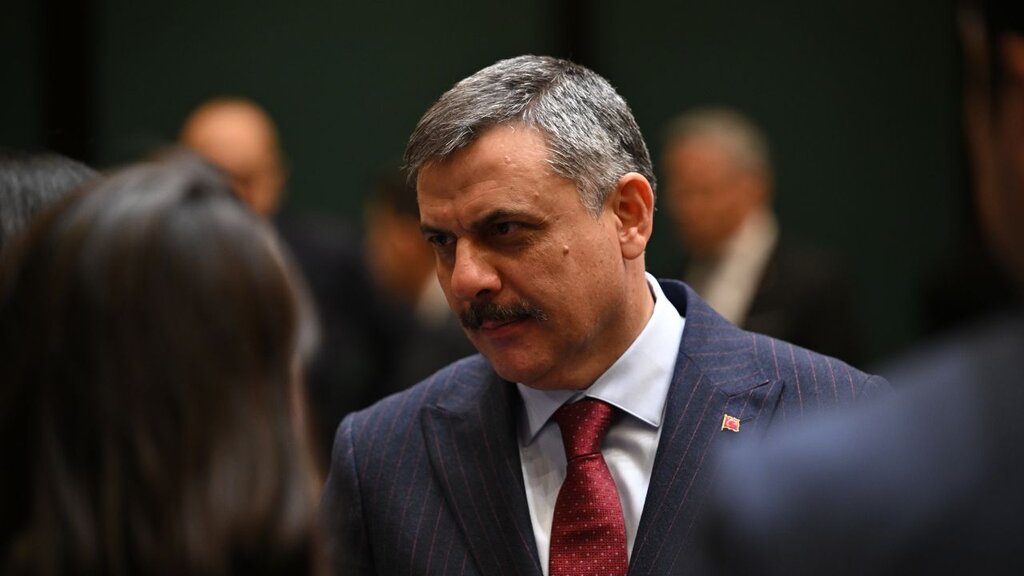
Ankara has drawn up plans for possible migrant flow from Iran
Türkiye has drawn up plans to deal with a potential inflow of people fleeing the war in neighboring Iran, Interior Minister Mustafa Çiftçi announced on March 4. Preparations include the creation of buffer zones along the border, the construction of tent camps, and controlled entry of people into Türkiye.
According to Mustafa Çiftçi, Ankara has prepared an initial capacity to accommodate up to 90,000 people in the event of a sudden inflow. He noted, however, that no unusual movement has been observed so far at the three border crossings between Türkiye and Iran.
According to data provided by the minister, around 5,010 people entered Türkiye from Iran between March 1 and 3, while 5,495 people exited the country.
Kiro Gligorov
PHOTO Reuters
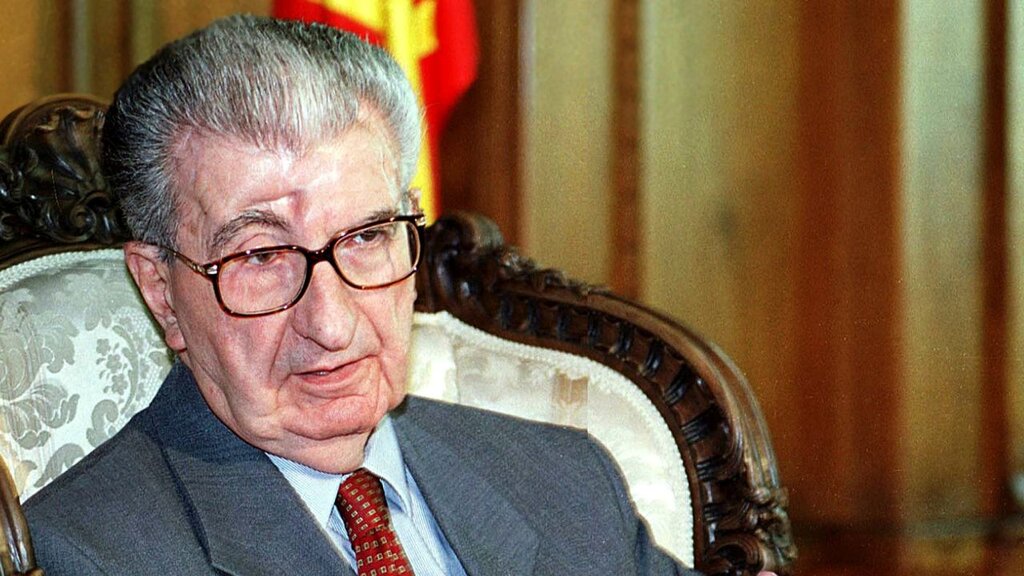
According to CIA document, Greece offered the then Republic of Macedonia $100 million to change its name
In 1992, the then-President of the Republic of Macedonia Kiro Gligorov refused a private offer of Greek officials of USD 100 million in aid on the condition that the country’s name be changed, but he refused, says a declassified CIA document dated November 6, 1992, cited by Deutsche Welle, reported BTA.
In his memoirs ‘’Macedonia Is All We Have’’, Kiro Gligorov does not mention such an offer, but writes that he was personally offered USD 1 million by Greek intermediaries to agree to a name change. The CIA described Gligorov as a “respected elder statesman and reformer working to balance competing forces in his republic and throughout the Balkans”.
Kiro Gligorov was the first president of the Republic of Macedonia following its declaration of independence in 1991. The dispute over the country’s name with Greece lasted for decades and was resolved with the Prespa Agreement in 2017, when the country adopted the name “Republic of North Macedonia.”
Panther KF51
PHOTO rheinmetall.com
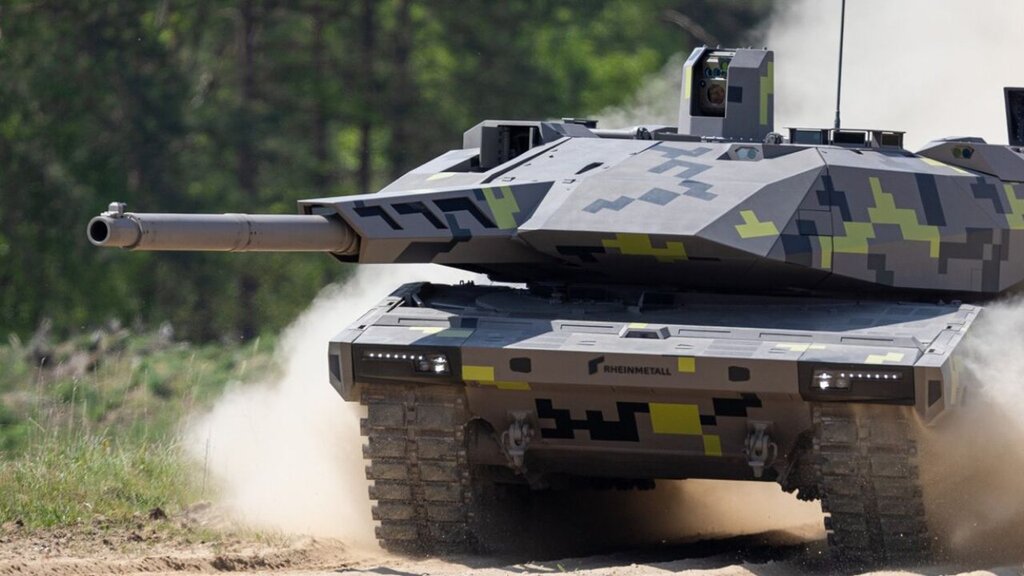
Rheinmetall acquires majority stake in Croatian company Dok-Ing
The German technology group Rheinmetall has acquired a 51% stake in the Croatian company Dok-Ing, while 49% of the company remains Croatian-owned, the two companies announced at a press conference in Zagreb. The value of the deal was not disclosed.
Plans include the creation of a Croatian competence center for unmanned and autonomous systems for military applications. The partnership will combine Dok-Ing’s unmanned platforms with Rheinmetall’s combat systems, including the Panther KF51 tank. The new products will be aimed at NATO markets and partner countries.
Dok-Ing has delivered around 500 platforms to clients in over 40 countries and is known for its unmanned demining systems, which are also used in Ukraine. Founded in 1889, Rheinmetall employs approximately 44,000 people across nearly 180 locations worldwide.
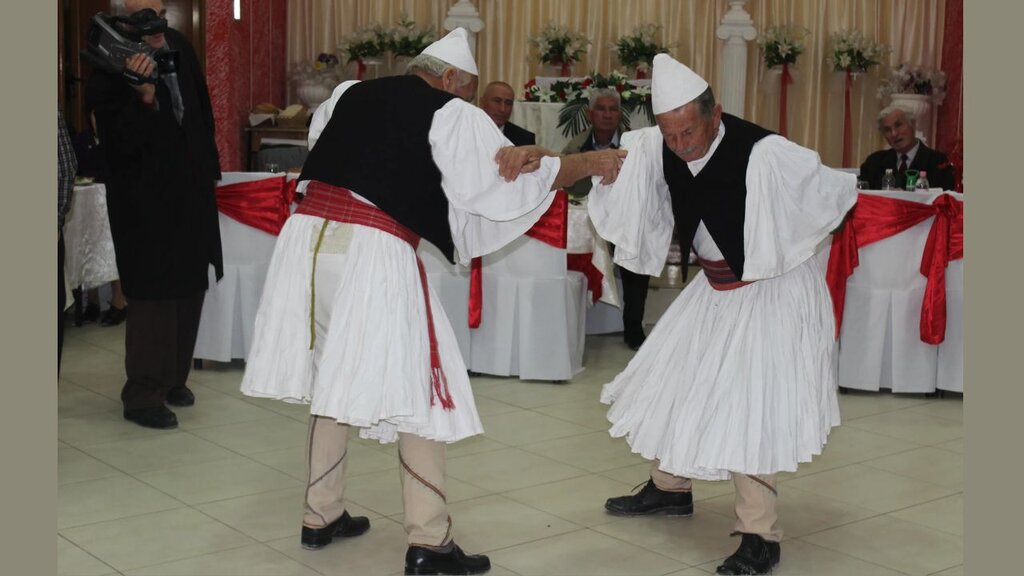
PHOTO myzeqejaflet.wordpress.com
Double dance of Myzeqe included in Albania’s cultural heritage list
Albania has expanded the list of its national intangible cultural heritage. The new additions include the ritual “Eel Dance” (Vallja e Ngjalës), the double dance from the Myzeqe plain in central Albania (Vallja Dyshe Myzeqare), women’s traditional costumes from the Zadrima region, the craft of making traditional Albanian felt hats (queleshe), and hand-sewn lace, reported BTA, citing the Albanian Telegraphic Agency (ATA).
One of these beautiful traditions is the Myzeqe Double Dance. It is performed by two men in traditional costumes to instrumental music. The choreography consists of two parts: a slower first part, featuring a characteristic gentle body tremble, and a more dynamic second part. The dancers’ synchronized movements showcase their skill and mutual respect. You can watch it in the following video:
Edited by Miglena Ivanova
Translated by Kostadin Atanasov
This publication was created by: Kostadin Atanasov