Radio Bulgaria


Author
Yoan Kolev
News
Journalist Nikolay Krastev: Iran aims to fuel chaos across the region
Friday 6 March 2026 15:01
Friday, 6 March 2026, 15:01
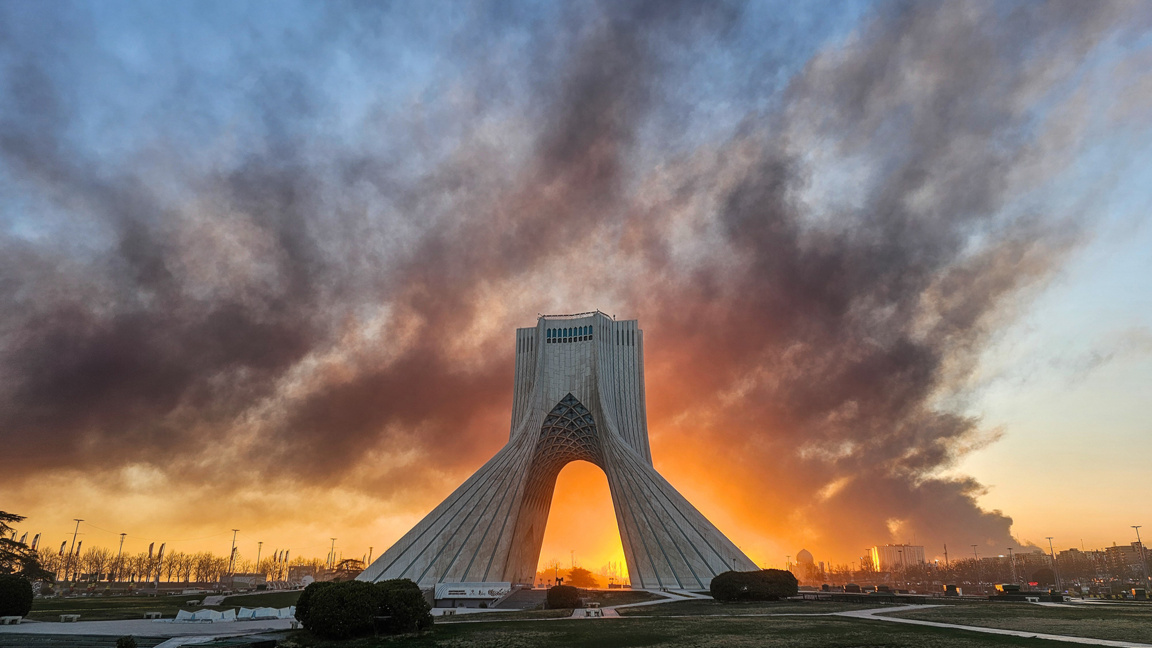
PHOTO AP/BTA
Font size
The launch of a ballistic missile by Iran towards Turkey prompted Defence Minister Atanas Zapryanov to request that the Prime Minister convene a meeting of the Security Council attached to the Council of Ministers. This meeting took place yesterday (5 March) and leaders of the parties represented in parliament were also invited.
However, representatives of DPS – New Beginning and Vazrazhdane walked out of the meeting. The DPS faction has called on President Rumen Radev to take responsibility and convene the Consultative Council on National Security. Vazrazhdane leader Kostadin Kostadinov said that there were no guarantees that the Bulgarian government would not drag the country into a military misadventure.
'Our compatriots should remember that their security is safeguarded not only by the Bulgarian state, but also by the North Atlantic Alliance. We have the capabilities to defend our country within NATO and at a national level, and I stress that the situation has not yet reached a critical point. But if it does, we are able to defend ourselves, and we have a clear strategy for doing so,' said Prime Minister Andrey Gyurov after the meeting.
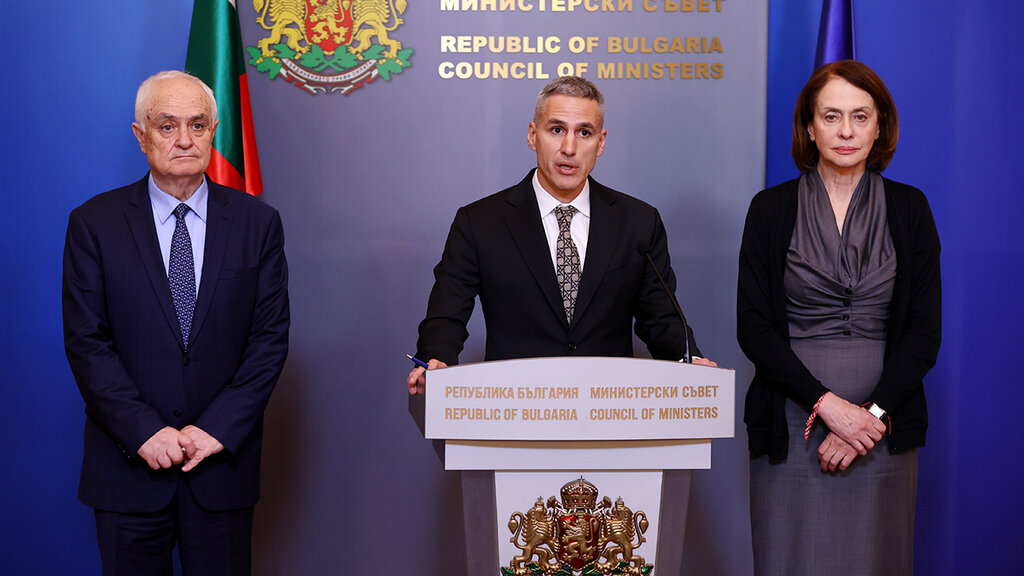
From left to right: Defence Minister Atanas Zapryanov, Prime Minister Andrey Gyurov and Foreign Minister Nadezhda Neynski after a Security Council meeting.
PHOTO BTA
He added: ‘NATO’s missile defence system is designed to repel a missile attack from Iran. As we saw in the case of Turkey, it worked flawlessly. That is why we can remain calm and rely on this collective defence. The safety and peace of mind of Bulgarian citizens is our priority.’
According to Prime Minister Gyurov, ‘Bulgaria is not directly threatened by military action. It is not a party to the conflict and is not involved in the operations.’
Journalist Nikolay Krastev, who helps us piece together part of the puzzle surrounding the events of the past few days, said the behaviour of the two political parties was intended to show that the caretaker government is incapable of dealing with the situation and lacks the capacity to conduct foreign and security policy.
In his view, this was not true: Bulgaria has such capacity, not only because it is a NATO member, but also because it is an important factor in regional stability.
With relations between Bulgaria and Iran going back more than 120 years, journalist and international affairs expert Nikolay Krastev outlined what Bulgaria should bear in mind from now on.
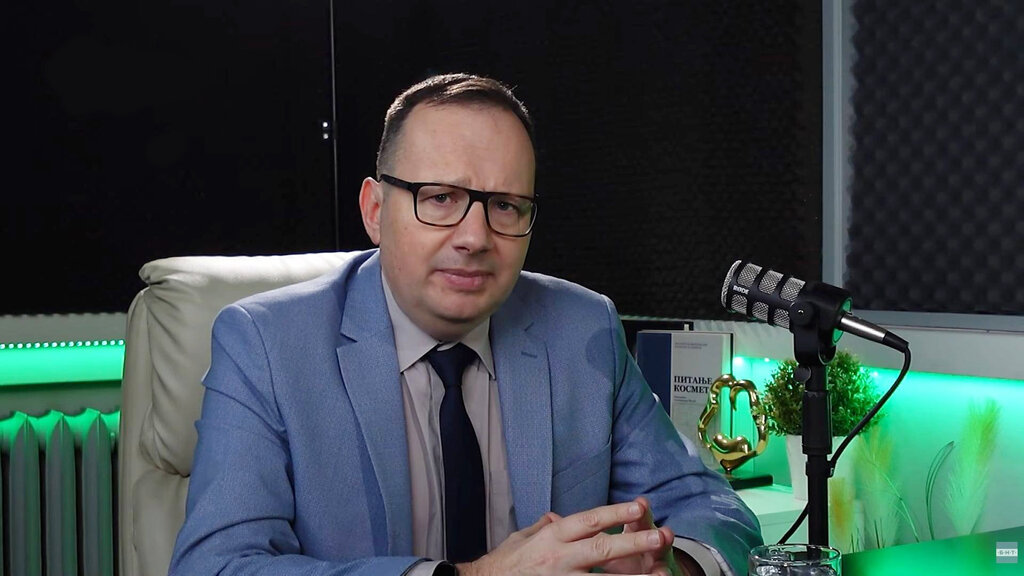
Nikolay Krastev
PHOTO Facebook/ Nikolay Krastev
'There are risks stemming from Iran’s behaviour in the Balkans. This is also linked to the 2012 bombing at Sarafovo Airport, which was carried out by the terrorist group Hezbollah. For Bulgaria, the risk of such an attack being repeated cannot be ruled out.
One of my guests on the podcast #Balkans, Ruslan Trad, said that Iran has influence in several cities along the Danube and on the Black Sea coast: These are the port cities of Vidin, Ruse and Varna.
All this should not frighten our compatriots, but the risk remains and it must be monitored by those whose job it is to do so,’ said Krastev, adding: 'At the moment, Iran poses a risk to itself, to the people fighting against the authoritarian regime there and to all neighbouring states.'
An example of this, he said, was drones that fell on the territory of Azerbaijan, one of which struck the airport in the enclave of Nakhchivan, located about 10 kilometres from the border between the two countries.
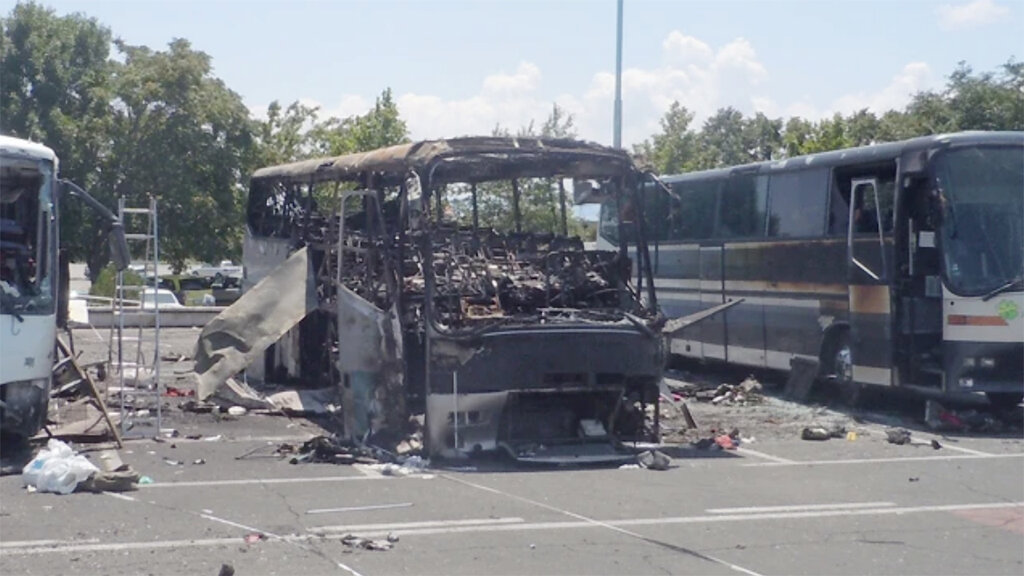
The attack at Sarafovo Airport on July 18, 2012.
PHOTO REUTERS
‘I don’t know whether Iran realises that such behaviour is creating more enemies than friends.’ The example of the attack on Nakhchivan shows that Iran is losing close neighbours such as Azerbaijan, which had been relatively neutral regarding the military actions last June and even now. So I’m not sure whether Iran is gaining anything from its behaviour – or rather losing,’ the journalist said.
The war waged by Israel and the United States against Iran has deprived Russia of an important ally in its war with Ukraine. Iran has been a major supplier of the so-called Shahed drones and various missiles that Russia has used to attack targets.
'Russia may have to change its military strategy and offensive actions due to the pressure of circumstances. However, there is also a risk that, because of this new conflict, the war in Ukraine will be pushed into the background.'
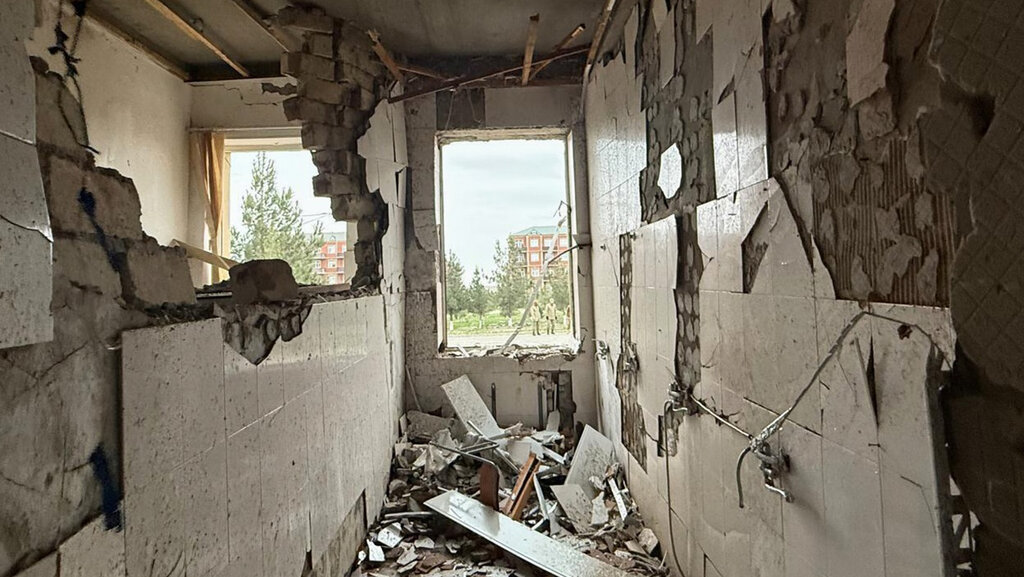
Damage to school in Julfa after drone attack on Azerbaijan on 5 March 26.
PHOTO AP/BTA
Krastev is convinced that Iran will continue fuelling conflicts and creating instability, whatever happens next.
‘Iran’s aim is to create chaos and hopelessness across the region, thereby intensifying tensions among the populations of the Middle East, the Caucasus, and even the Balkans. The greater the instability and uncertainty, the greater the distrust in these regions will grow.’
Editor: Elena Karkalanova
Posted in English by E. Radkova
This publication was created by: Elizabeth Radkova