Radio Bulgaria


Author
Ivo Ivanov
Saturday 7 March 2026 16:05
Saturday, 7 March 2026, 16:05
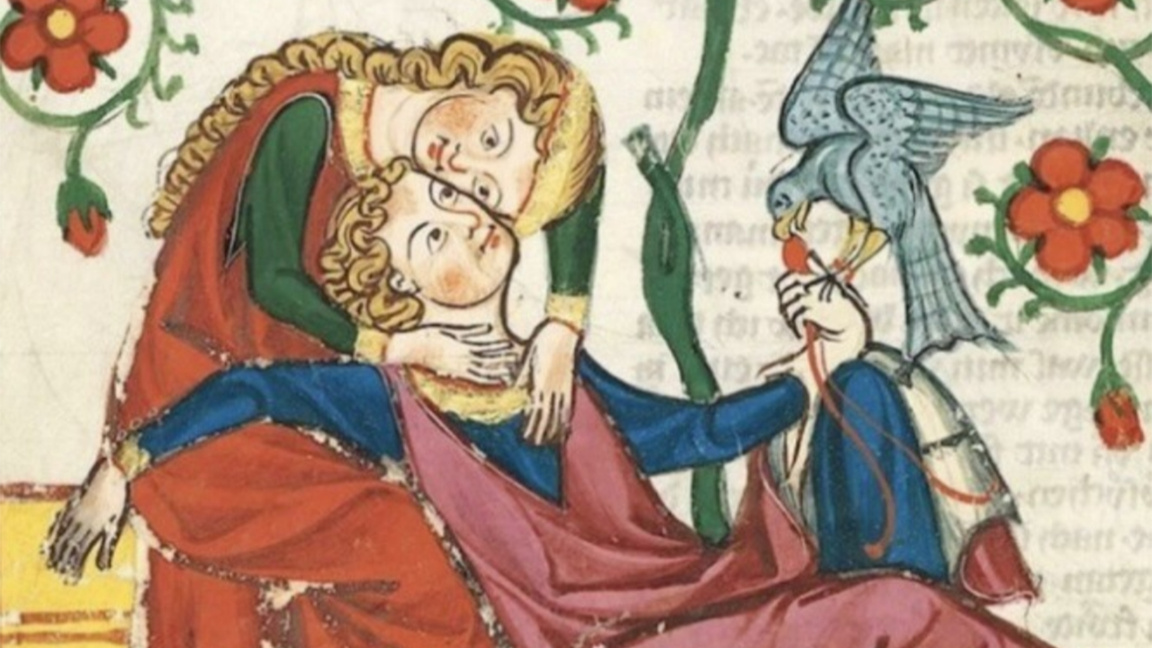
PHOTO Archive
Font size
The legend of the Bulgarian maiden Ladika and the knight Milohnev first appeared in Bohemia in 1838 in a calendar publication titled The Magic Lamp. Even its first publisher expressed doubts about the story’s supposed 13th-century origins. To this day, many historians believe the narrative combines elements of local folklore with the 19th-century Czech understanding of Bulgarian history.
In 1987 the legend was republished in Prague in a jubilee edition by the Slavist Prof. Dr. Zdeněk Urban, who devoted his scholarly career to studying Czech-Bulgarian cultural ties.

Prof. Dr. Zdeněk Urban
PHOTO Archive
In Bulgaria, the story was first published by Professor Yordan Andreev in the journal Epohi (Epochs) in 1993 under the title A Romantic Love Story from the Bulgarian Middle Ages.
According to the story, during the return of the Fifth Crusade a knight from the army of Hungarian King Andrew II was received by a Bulgarian noble family. While hunting, he was seriously wounded and was nursed back to health by his host’s daughter, Ladika.
The choice of the woman’s name appears to carry symbolic meaning. The text draws a link to the Old Testament figure of Eve through the concept of Blaga (“the good” or “the blessed”). In this context, the names Lada and Ladika are interpreted as signifying goodness or grace.
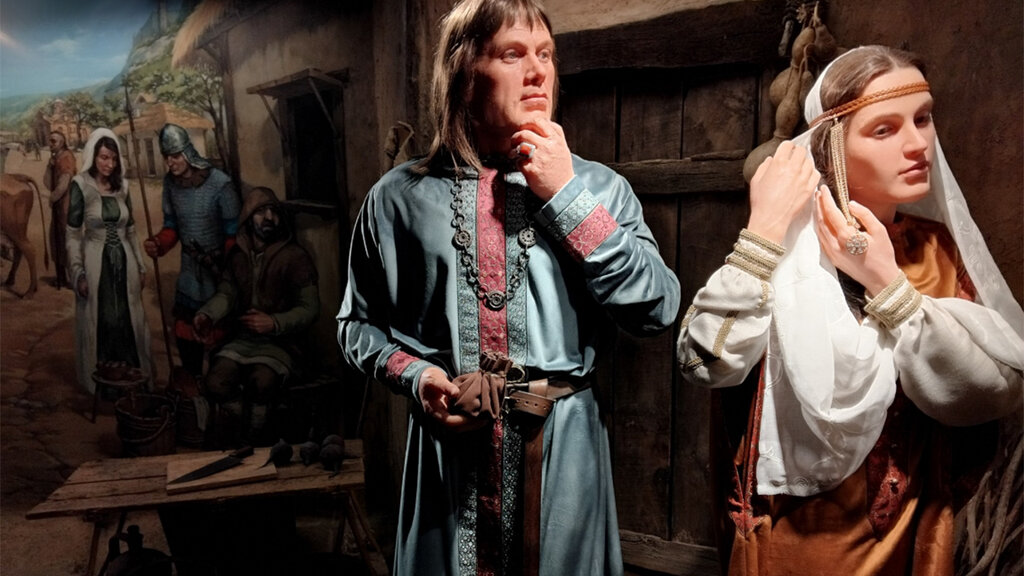
There's little info on women from the medieval period, and most of what there is focuses on aristocratic women.
PHOTO Ivo Ivanov
As the story unfolds, the Bulgarian woman falls in love with the knight while caring for him. When he learns that their relationship will result in a child, he flees. Claiming to fear Bulgarian “pagan customs”, Milohnev returns to Bohemia and marries the daughter of a local aristocrat.
In the spirit of medieval chivalric tales, however, he is eventually punished for his betrayal. A mysterious magic lamp begins to haunt him, seeking retribution for the dishonour and the lost life of Ladika. After her lover’s departure, the Bulgarian woman is killed by her own family for bringing shame upon them by bearing a child out of wedlock.

In the legend, the haunted knight sees men dancing a magical horo on Ladika’s lamp. The earliest known depiction of a horo in Bulgaria dates from the 14th century and is preserved in Hrelyo’s Tower at the Rila Monastery.
PHOTO Ivo Ivanov
The story reflects medieval ideas about the role of women within the family in both Czech and Bulgarian societies. In this context, Lada appears primarily as a guardian of the household.
In such traditional communities authority — the right to command and decide — belonged to men, the bearers of the sword and spear. Women, regarded as the “weaker” side, were sometimes portrayed as relying on cunning or even mystical means to achieve their aims.
Any departure from these social norms was seen as a shock to the community and could be harshly punished. Although daughters of noble families might receive some degree of tolerance, the moral code remained strict. Central to it was the principle of retribution for unjust death — especially a “double death”, involving both mother and unborn child.
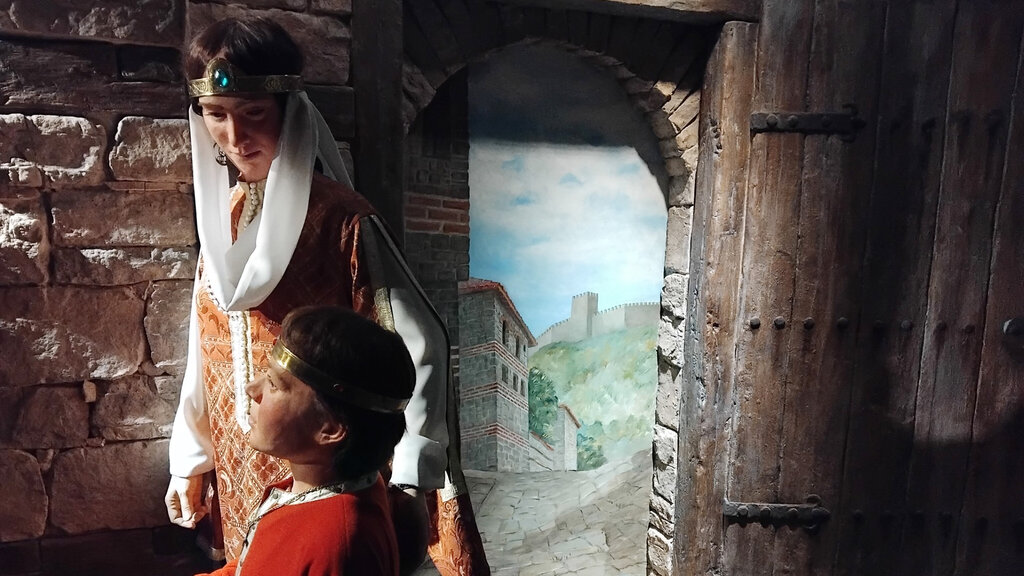
In the story, Lada reflects medieval views of women’s roles in Bulgarian society, where women were expected to be wives and mothers and deviations from these norms could be punished.
PHOTO Ivo Ivanov
Editor: Desislava Semkovska
Edited and posted in English by E. Radkova
This publication was created by: Elizabeth Radkova