


Author
Tsvetana Toncheva
News
Vlada Tomova - a Bulgarian musician with a mission across the Ocean
A devoted promoter of Bulgarian folklore in the United States, the singer wishes Bulgarians greater self-confidence
Sunday 8 March 2026 11:30
Sunday, 8 March 2026, 11:30
PHOTO Lila Rupa
Font size
In addition to being a singer and composer, Bulgarian musician Vlada Tomova is also the creator of musical ensembles and international cultural exchange journeys. At the end of February, within the framework of the Master of Art festival, she made her debut in Bulgaria as the author of a documentary film titled A Dragon Flew Over (“Zmey Prelete”), created together with her New York-based folk choir Yasna Voices. The film-concert is a tribute to the American Martha Forsyth - an outstanding ethnomusicologist who visited Bulgaria dozens of times from the mid-1970s until the end of the last century, collecting and recording thousands of Bulgarian folk songs in different settlements and helping popularize Bulgarian folklore.
“A Dragon Flew Over”: A screening dedicated to Martha Forsyth
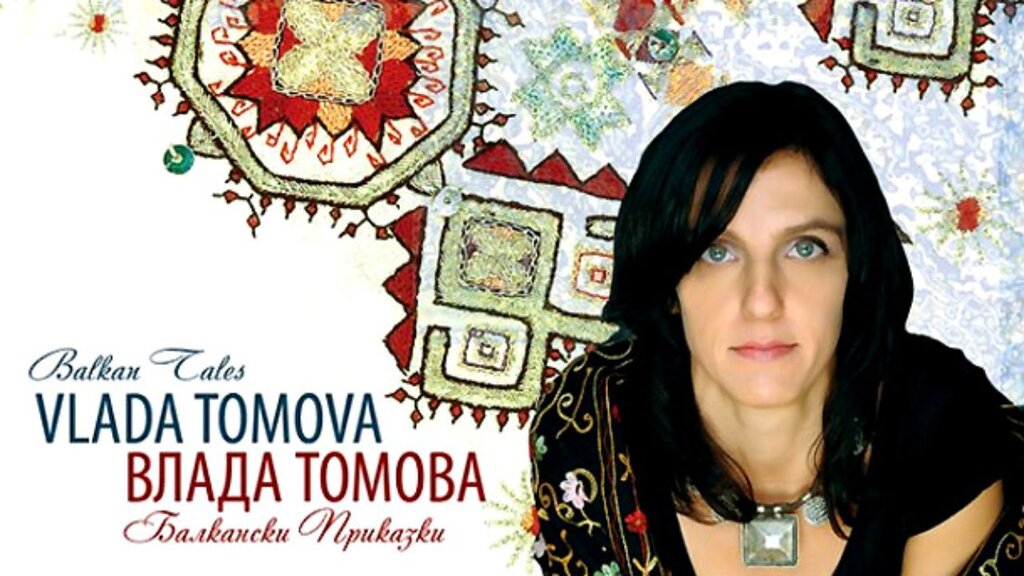
PHOTO YouTube /Vlada Tomova
Vlada Tomova, who considers Martha Forsyth her mentor, inspiration, and close friend, is often described as the Bulgarian “sorceress” of the music scene in New York. She graduated from one of the most renowned music institutions in the world - Berklee College of Music - and for more than a quarter of a century she has interpreted and promoted Bulgarian folklore in the United States and around the world.
In addition to founding New York’s first Bulgarian women’s folk choir,Yasna Voices, Tomova also created the ensemble Balkan Tales, which features elite instrumentalists from New York. Their debut album of the same name, released in 2009, has been presented worldwide. Tomova has performed with many renowned artists and has been invited to participate in projects, theatrical productions, and television shows. She has worked with Milcho Leviev and Theodosii Spassov. Many Bulgarian children around the world learn the Cyrillic alphabet through her Little Song for the Alphabet.
She has been called “one of the most exciting contemporary voices of Bulgaria and a star of the music scene in the United States.” Her exclusive interview for Radio Bulgaria begins with the question: does she herself feel like a star?
“That is a very relative concept,” Vlada smiles. She has met artists who fill huge arenas and have invited her to participate in their concerts - such as the Belgian performer Stromae. Yet she does not feel intimidated. “It’s a very strange word for me - ‘star.’ I can’t really define it. I always feel spontaneous and simply myself, and whether I’m a star - I don’t know if that matters much.”
Vlada Tomova has lived in the United States for about 27 years. She finds it difficult to define herself as either American or Bulgarian:
“Since childhood I have felt like a citizen of the world. In fact, I am partly of Russian descent, but I grew up in Bulgaria. In my family we spoke a lot of Russian, I studied at a Russian school, and I was born in Crimea, in Ukraine. As a child people often asked me, ‘Do you feel Bulgarian or Russian?’ and I could never answer that question. Abroad I definitely feel the Bulgarian part of myself very strongly and emotionally. In my opinion, one’s roots are something that always lives deep within us, and even if we are at the far end of the world, they are always there. Sometimes we even feel them more strongly. But in essence, I think of myself as a citizen of the world.”
PHOTO Facebook /Vlada Tomova
She describes her parents as “musicians and engineers”:
“My father was a self-taught pianist. They met at the Polytechnic Institute in Kharkiv, where they were both students, and my mother came there with the desire to sing in the group my father led. So both of them were deeply connected to music. My mother performed Russian romances, and her dream was to become an opera singer. She was the one who truly pushed me toward music. I myself was drawn to the stage as an actress. From a young age I was interested in theatre and pantomime, but my parents were against it.”
At the age of five, Vlada was enrolled in an experimental piano class at the Music School in Sofia. But she could not withstand the workload - the long hours sitting at the piano and the lack of even a single free day without practicing. “For my personality it simply didn’t work. I rebelled and started skipping lessons…”
She graduated from the school attached to the Russian (then Soviet) embassy and, at her father’s insistence, enrolled in the Faculty of Mathematics at Sofia University - where, in practice, she barely attended.
“Thank God I didn’t receive a diploma - but I wouldn’t have been able to use it anyway, because in reality I knew nothing. Toward the end of my studies my band Free Point was formed. We even appeared on television, had regular concerts in Sofia, and recorded an album. Shortly before the great inflation in Bulgaria in the 1990s, the album was finished, but there was no one to release it. That’s when I realized it might be a good idea to study abroad, and since I loved jazz very much, I set my sights on Berklee College of Music.”
PHOTO BTA
Her interest in Bulgarian folklore and genres such as ethno and world music was initially sparked by her social environment.
“Once I entered this extraordinarily prestigious college for jazz and contemporary music - Berklee - I realized how little I actually knew about jazz. Somehow I felt the need to find something that was truly mine, something that would make me interesting. My classmates were very intrigued by the fact that I was from Bulgaria, and they all thought I could sing ‘like the Choir.’ They would say: ‘Oh, you’re from Bulgaria - you can sing like the Choir!’ And I would answer that I couldn’t sing like a choir because I’m one person, not a choir…”
Her classmates used “the Choir” to refer to recordings from the legendary series The Mystery of the Bulgarian Voices, as well as to the ensemble of the same name itself and its distinctive sound - its unique vocal production, melismatic style, melodic ornamentation, and asymmetric rhythms.
“They kept urging me: ‘Can you sing something?’ So I started searching my memory because I actually didn’t know a single song in full. I remembered a verse or two from two songs, which I happily sang at parties with my classmates - and everyone was thrilled. Gradually I began recalling other songs and experimenting, mixing them with jazz. In my composition classes I used irregular rhythms and ornamentation. I started listening in the Berklee library - because they have everything - to that Choir, The Mystery of the Bulgarian Voices, which at the time was touring all over the world, from Japan to Rio de Janeiro. That was really the beginning. I met Martha perhaps six years later. I had already graduated from Berklee and had recently moved to New York. I returned to Boston for a day to participate in an event of the Bulgarian community, and it happened that she and her husband were there.”
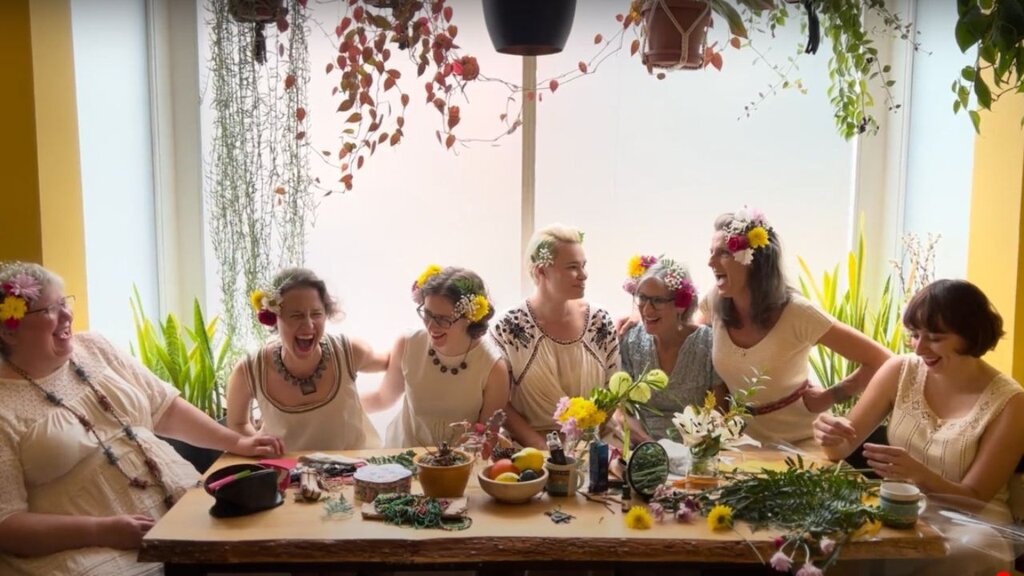
“Zmey Prelete” (A Dragon Flew Over) is a documentary film about the life and work of the American ethnomusicologist Martha Forsyth
PHOTO Institute of Ethnology and Folklore Studies with Ethnographic Museum, BAS
Martha Forsyth’s contribution to collecting and researching Bulgarian folklore has long been known in Bulgaria, but clearly her role in Vlada Tomova’s life is key, since the singer has dedicated a film to her.
Martha Forsyth, a lifelong passion for authentic Bulgarian folklore
“At first, my return to the roots was really driven by the curiosity of my classmates. But once I began singing these songs, I felt an emotion inside me - an emotional pull I had never imagined folk songs could awaken in me. My desire to learn more songs grew stronger. I started looking for contacts with some of our singers so I could learn from someone. Our singing style is so different - you can try to imitate it somehow, but you can also make many mistakes and think something is done one way when in fact it’s done completely differently. After I met Martha, at some point I asked her to guide me toward people who could help me learn more about the technical aspects of singing. She connected me with Kremena Stancheva. In fact, maybe my choir was already in its early phase, because after moving to New York one of the first things that happened was this strong interest - especially from young people - in learning Bulgarian folk songs.”
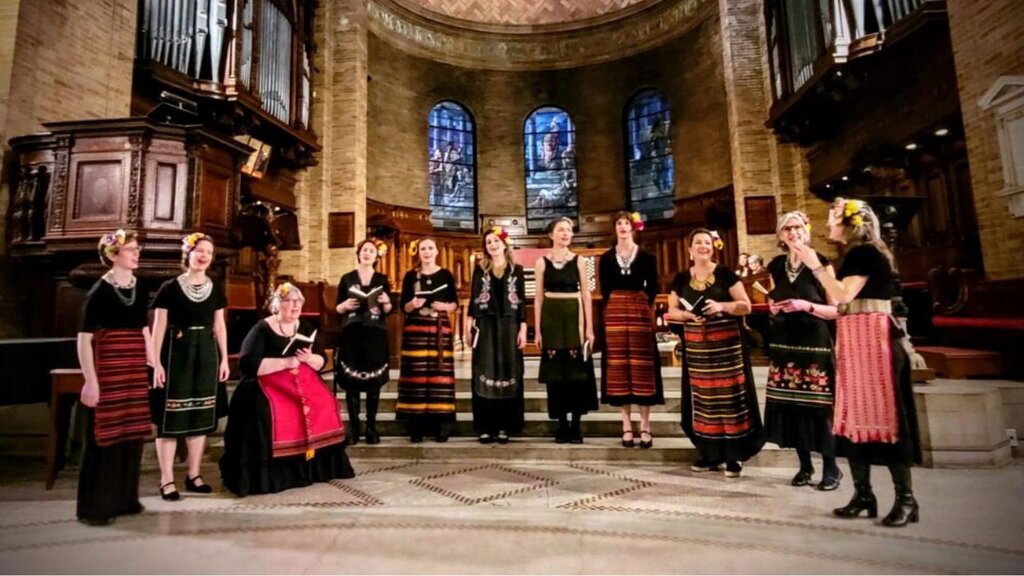
Yasna Voices choir
PHOTO Consulate General of Bulgaria in New York
The women’s vocal ensemble Yasna Voices now famous also in Bulgaria was formed at the end of 2002 and the start of 2003. Tomova had moved to New York just five or six months after the collapse of the Twin Towers and did not even think she would continue singing. She wanted to work in the music industry, but there were no jobs.
“I don’t even remember how many résumés I sent - it was simply pointless. My best friend at the time said: ‘Vlada, why don’t you start a choir?’ So I posted an announcement on one of the first online platforms where you could advertise anything you wanted. I even presented it as a class - a group activity. I never imagined it would actually become a choir. Immediately about ten people showed up, and literally within two or three months the ensemble was formed - with just one announcement.”
Yasna Voices choir performs Bulgarian music in New York
Over the following years 'Yasna Voices' remained with an unchanged lineup of nine women passionately devoted to Bulgarian folk singing. They never miss their weekly rehearsal - three hours every Sunday at Vlada’s home. The ensemble’s first public performance took place only a few months after its creation and included the participation of the legendary Bulgarian folk singer Yanka Rupkina, who remains a friend of Yasna Voices to this day.
A few years after its founding, the choir received a grant from a foundation supporting cultural initiatives between Eastern Europe and the United States. With those funds they spent about ten days visiting the great Bulgarian singer Kremena Stancheva in her native village of Kovachevtsi (western Bulgaria). “We studied with her, sang, and lived in Kovachevtsi. It was a wonderful immersion in Bulgarian culture for them - and for me as well, because I myself haven’t lived much in the countryside,” Vlada recalls with a smile.
Later Martha also introduced her to wonderful women from the village of Draginovo and later to the Hadzhiev sisters from Nedelino. “But Kremena Stancheva was the most important for me - we maintained a friendship as well.”
Vlada often called Martha for reference questions too - for example about dialect words - because the American ethnomusicologist knew Bulgarian dialects incomparably better than Vlada herself.
The conversation about Martha Forsyth, the ensemble Yasna Voices, the songs and the dragons, and Tomova’s plans for new musical and film projects continues and will soon be presented in full on Radio Bulgaria. At the end of the interview, Vlada Tomova addresses Bulgarians with the following wish:
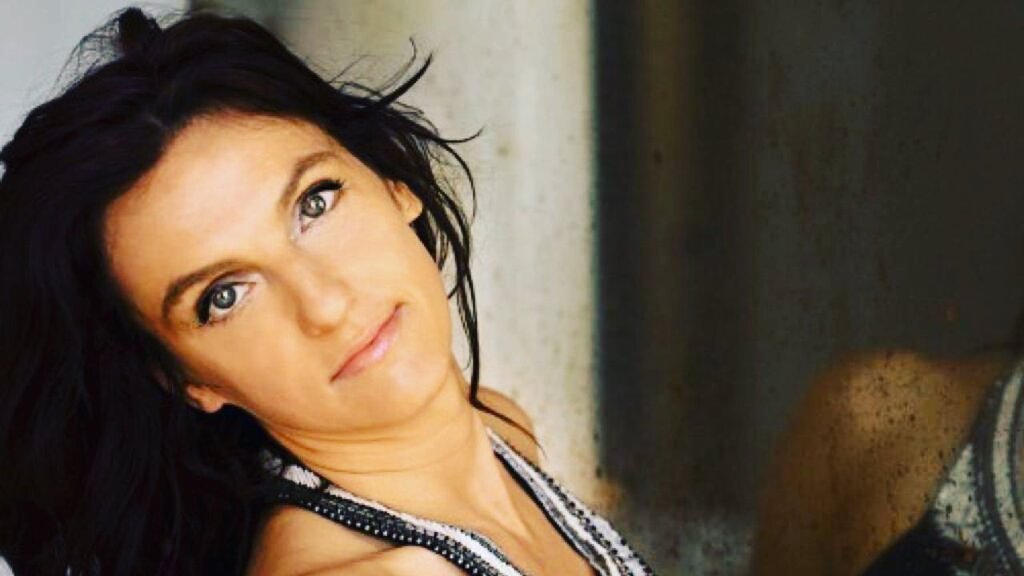
PHOTO Facebook /Vlada Tomova
“One wish, which I don’t know how relevant it is today but seems important to me, is that we should have self-confidence. When I left Bulgaria, my national self-confidence was extremely low. Later it increased many times - partly because my roots began to speak within me and I managed to see how valuable they are. I think our national self-awareness has risen a lot, but there is still a shade where it is either too inflated or too diminished, and somehow we cannot find a healthy middle ground where we can feel proud of being Bulgarians and of everything we have given to the world - without overdoing it. Self-confidence should rest on objective reality and be accompanied by action. Sometimes we rely too much on our history, on what we once were. But we are here now - and we create. Every single day we continue to create. If we believe that each day we build upon what our ancestors - our fathers, mothers, and grandmothers - have left us… yes, we have incredible wealth, and I am glad we preserve it. But we can do even more.”
Read more:
Vlada Tomova on Bulgarian folk music as an inspiration
BNR releases The Alphabet Song, performed by The Radio Children
Photos: Lili Rupa, YouTube /Vlada Tomova, Facebook /Влада Томова, BTA, Institute of Ethnology and Folklore Studies with Ethnographic Museum, BAS, Consulate General of Bulgaria in New York
English: R. Petkova
This publication was created by: Rositsa Petkova
- #The Mystery of the Bulgarian Voices
- #Vlada Tomova
- #Bulgarian musicians New York
- #"Змей прелете" (A Dragon Flew Over)
- #Martha Forsyth
- #A Dragon Flew Over
- #Bulgarian folklore in USA
- #Bugarian folk choir New York
- #Bugarian folk choir USA
- #Yasna Voices choir
- #American ethnomusicologist Martha Forsyth
- #Bulgarian musicians USA
- #ensemble Balkan Tales
- #Kremena Stancheva