


Friday 8 May 2026 12:40
Friday, 8 May 2026, 12:40
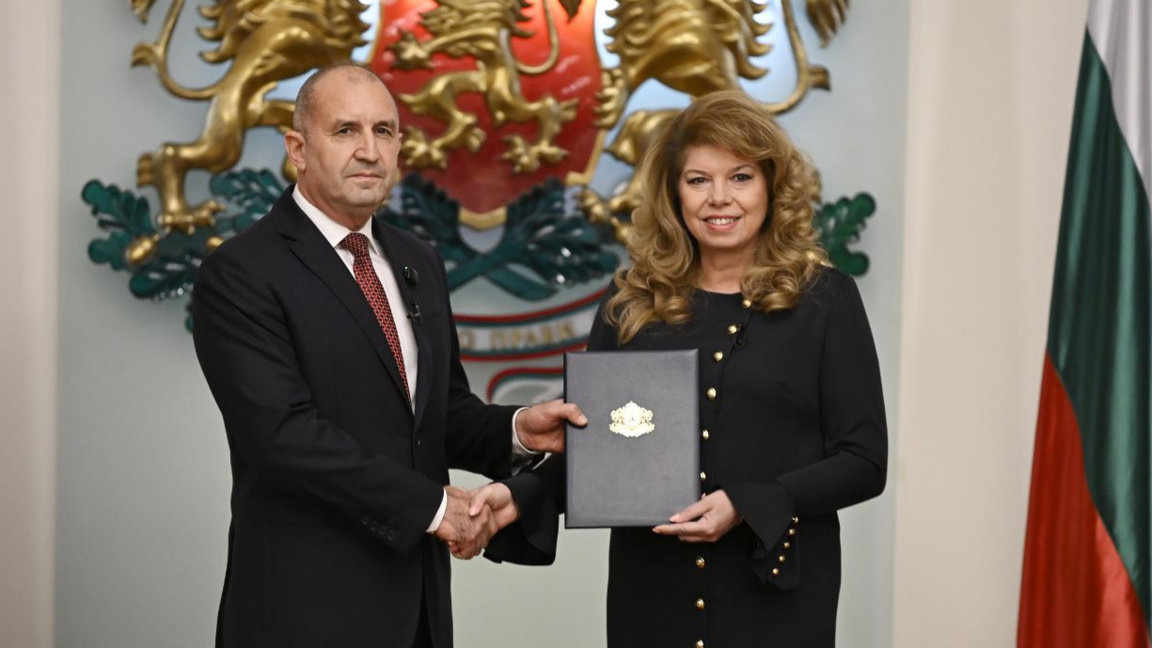
PHOTO BGNES
Font size
Rumen Radev – the country's former president and current leader of "Progressive Bulgaria" party that won parliamentary majority in the elections on April 19 will be the new prime minister of Bulgaria. On May 7, he accepted from President Iliana Iotova the first exploratory mandate for the formation of a regular government within the framework of the 52nd National Assembly and immediately returned the folder with specific proposals for the structure of the Council of Ministers. He recalled that for 9 years as president, together with Iliana Iotova as vice president, they had handed over 27 mandates for the formation of a government, most of which in the past five years:
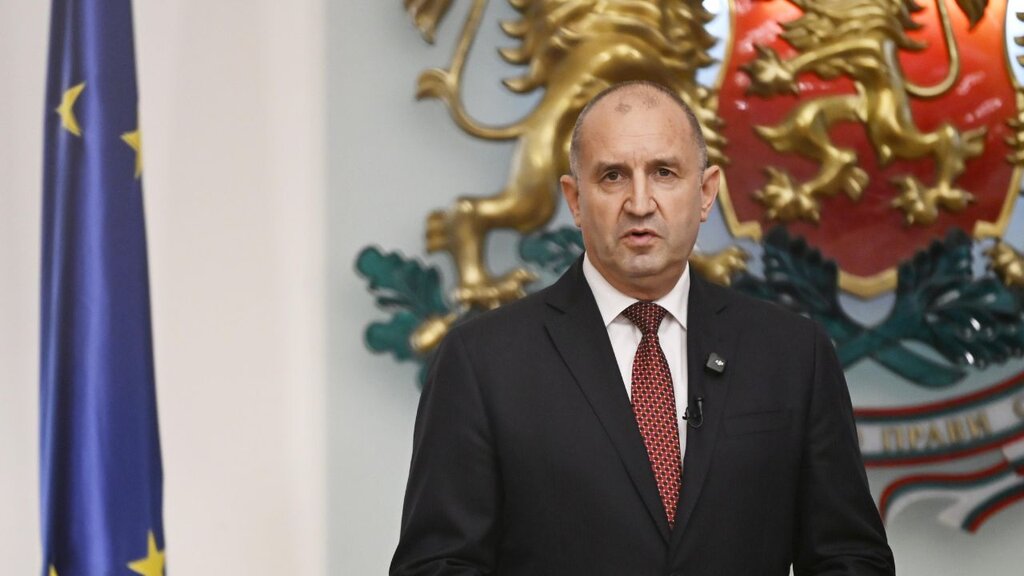
PHOTO BGNES
"After
all these years of political instability, fragile coalitions and
short-lived governments, Bulgarian citizens spoke out in the last
elections and put an end to the political crisis. With their votes,
they demonstrated their will for stable institutions, for freedom,
democracy and justice, by giving a parliamentary majority to a
political force. This is a huge trust, but for us at Progressive
Bulgaria it is an exceptional responsibility, which we accept and
prove with tireless work and dedication. In our entire democratic
history in recent decades, there has been no other government formed
so quickly immediately after the elections," Radev pointed out
upon receiving the mandate.
Rumen Radev presents cabinet lineup
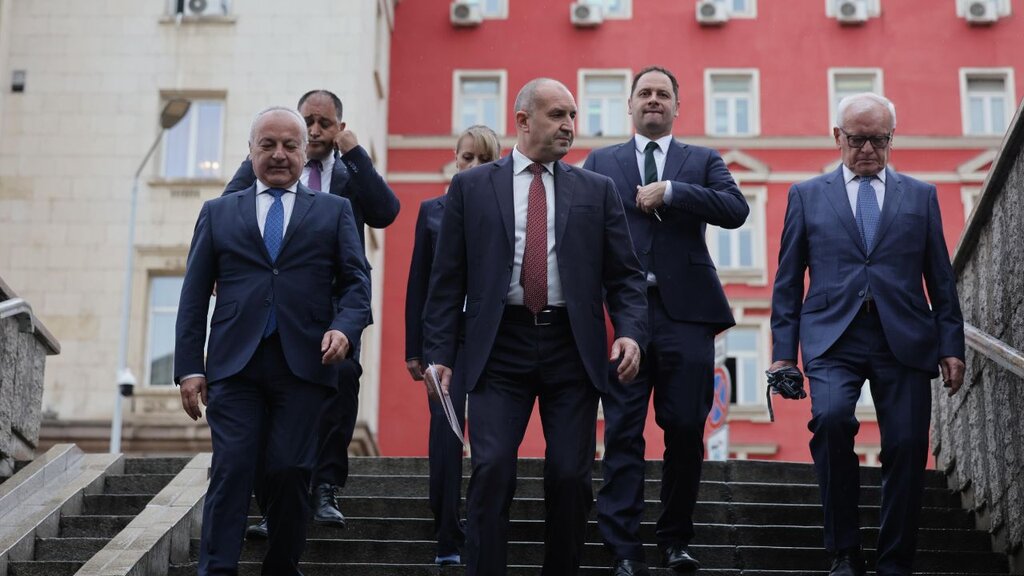
PHOTO BGNES
He
assured that his team is already working on policies with a long-term
horizon, in order to guarantee "the modern accelerated development
of the country, the security and well-being of Bulgarian citizens."
But the future prime minister also brought urgent tasks to the
forefront.
“First
of all, let's break the trend of galloping prices, no matter how
difficult it is,” Radev pointed out to the president and the
journalists present. “Then, of course, restoring justice, electing
a new Supreme Judicial Council and its Inspectorate. The budget for
the year has an extremely large number of question marks and I hope
that as soon as possible we will understand what a ‘hidden
deficit’
means and what dimensions it has. We
should
not lose the payments under the Recovery and Resilience
Plan."
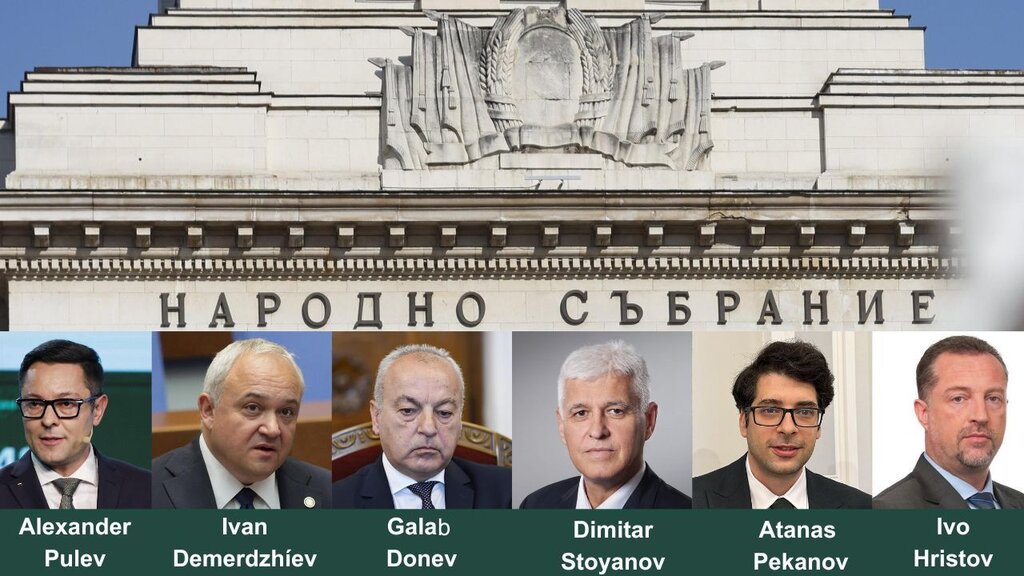
PHOTO BGNES
The
future Prime Minister Rumen Radev is placing
his closest associates - Galab Donev, Dimitar Stoyanov and Ivo
Hristov, on
key
positions in the proposed government, journalist Veselin Stoynev
commented immediately after the names in the government became known.
The significant presence of women in Radev's proposed cabinet is also
impressive - five out of a total of 18 ministries will be led by
women. It is curious that two of the four deputy prime ministers do
not have specific portfolios.
"All
responsibility and all hopes are concentrated in this huge credit of
trust, which is now materializing in the
government.
So, whatever the justifications for some bad legacy, they will not
have serious weight in
society.
And they will not provide grounds for measures that will turn out to
be pro-inflationary instead of anti-inflationary," the
journalist says.
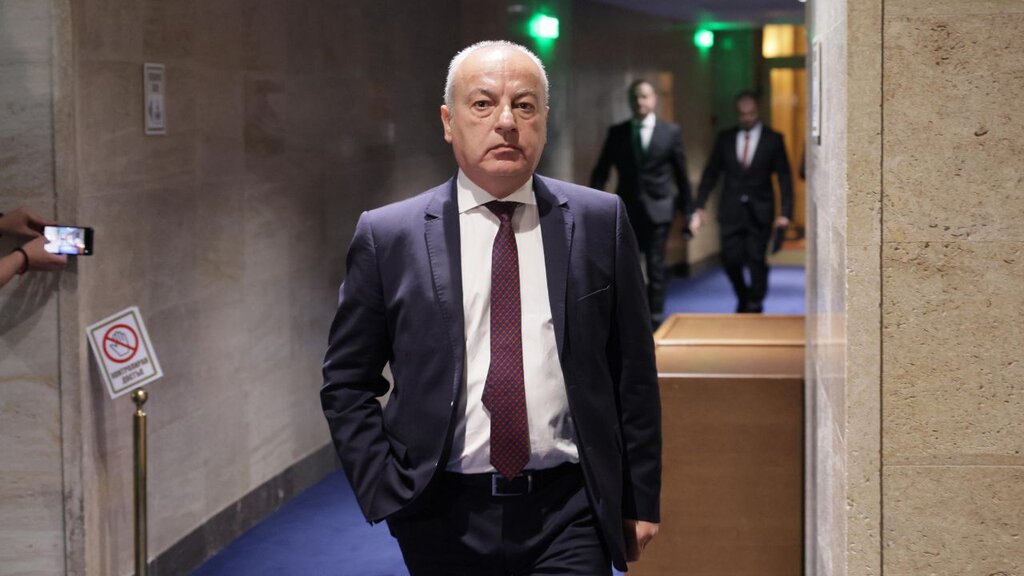
Galab Donev
PHOTO BGNES
Adopting
a state budget is a top priority, nominated Minister of
Finance and Deputy Prime Minister Galab Donev said upon leaving the
meeting with President Iliana Iotova,
and added:
"The state needs a financial plan that shows the priorities for
development."
The
future budget must be prepared on the basis of a serious sectoral
analysis and the policies in the management program of "Progressive
Bulgaria", Lyubomir Karimanski, a member of the BNB Governing
Council, said
in an interview for the BNR program "Horizont".
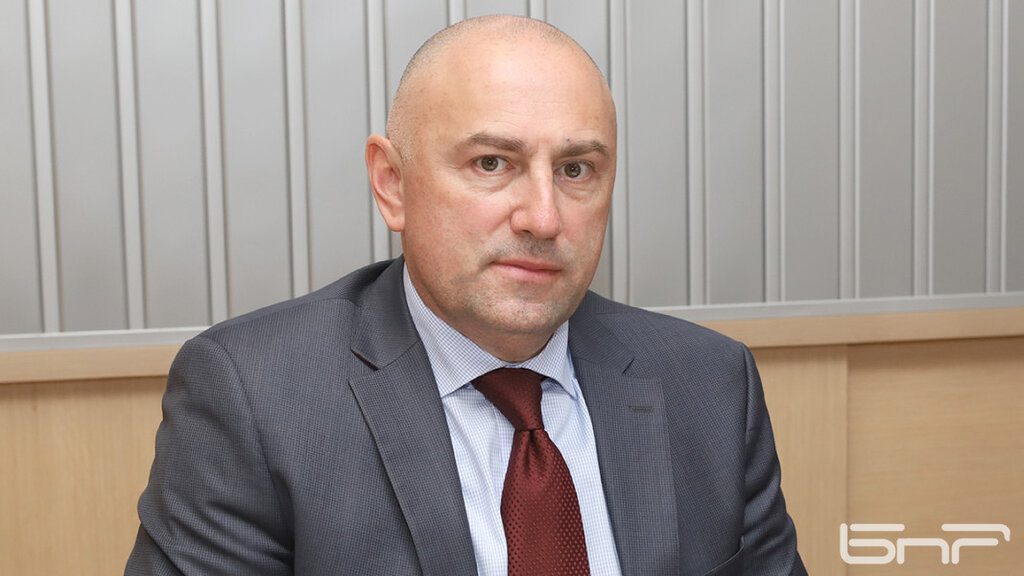
PHOTO Ani Petrova
He warned that Bulgaria is entering the preparation of the budgets for 2026 and 2027 with an alarming deficit of 1.4% for the first four months of this year and growing public sector spending. According to him, the new government must first control spending and not rely on new debt. He insists on eliminating the so-called automatisms - wage increases in some sectors (tied to the minimum or average wage), because they "make the budget powerless". Karimanski proposes optimizing the administration and stricter fiscal discipline. According to him, the 2027 budget should be completely new and tied to a clear management program and sectoral reforms.
"We
need very strong measures, very strong actions right from the start.
When there are such expectations from society, we must respond
immediately. I would not start with a loan, I would start with
measures to control the expenditures.
Let us strive for the debt ceiling to be lower," Lyubomir
Karimanski said.
Compiled
by: Elena Karkalanova
This publication was created by: Alexander Markov