


Author
Yoan Kolev
News
Sociologist Parvan Simeonov looks beyond numbers in Bulgaria’s presidential vote
Wednesday 4 November 2026 07:35
Wednesday, 4 November 2026, 07:35

Parvan Simeonov
PHOTO BTA
Font size
Iliana Iotova is Bulgaria’s first woman president, democratically elected to serve as head of state and commander-in-chief of the armed forces. This provides a starting point for our analysis of the presidential election on 1 November 2026 with sociologist Parvan Simeonov of the Myara polling agency, BNR’s partner in covering the vote.
Iotova will formally begin her elected term in January 2027. Until then, she will continue to serve as president, completing Rumen Radev’s term. The current prime minister spent nine years as head of state, with Iliana Iotova as his vice-president, before stepping down to enter the executive branch.
“We have yet to see what Iliana Iotova’s leadership style will be, but the fact that a woman was running for head of state did not become an issue during the election campaign,” says Parvan Simeonov. In his view, her opponents tried to deprive her of her “advantage as a woman” by running a largely negative campaign. This, however, mobilised a feminist vote of sorts:
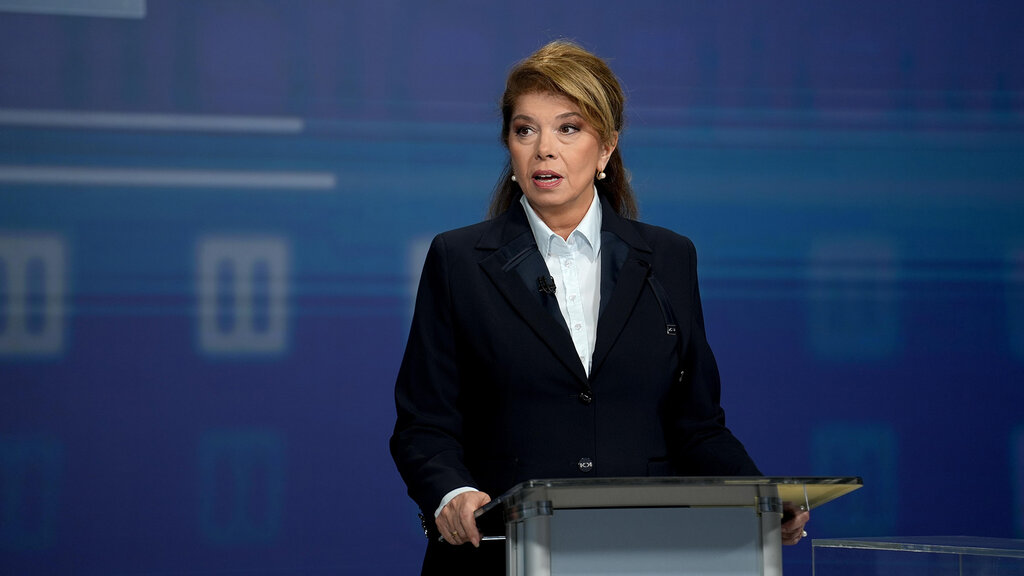
Iliana Iotova during the presidential debate ahead of the run-off on 1 November.
PHOTO BGNES
“Interestingly, according to Myara’s exit poll, support for her was not particularly strong among women in the first round, but was markedly so in the second. It turns out that Bulgaria has no problem electing a woman president, but turnout in the presidential election was very low, which suggests that Bulgarians do not have a particularly clear understanding of the presidency itself. For the first time in a long while, the presidential election was not held alongside another election, when we tend to see normal turnout levels. This time, only presidential elections were held, and the turnout of 1.5 million voters in the first round and 1.9 million in the second suggests that people do not attach much importance to presidential elections.”
The sharp confrontation and narrow gap between the two main contenders, Iliana Yotova and Andrey Gyurov, after the first round prompted a slight increase in interest in the run-off. Even so, only a small proportion of Bulgaria’s 6.59 million eligible voters expressed their preferences. Turnout in the run-off — around 25.5% — nevertheless lends the election a degree of legitimacy, Simeonov notes:
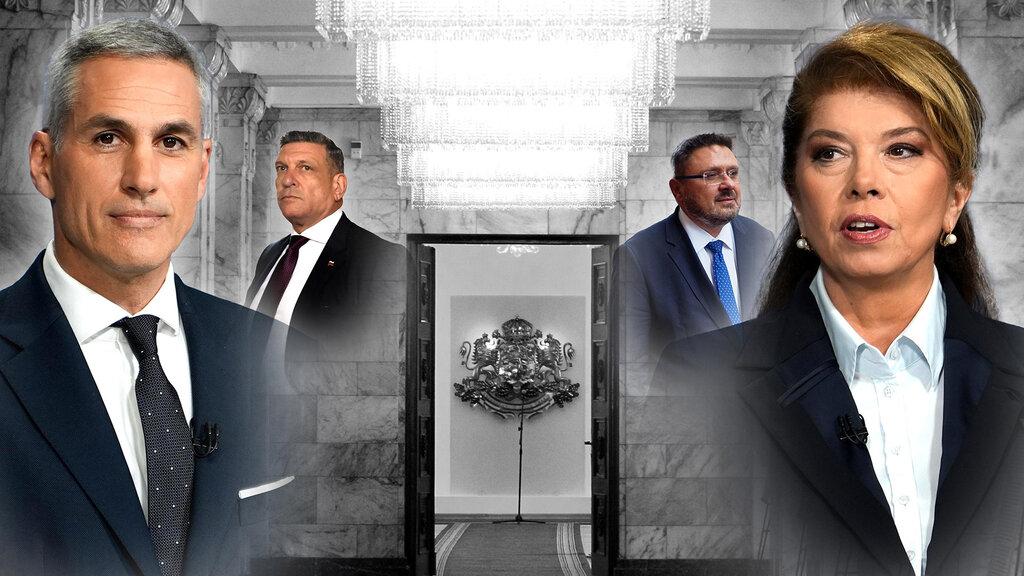
PHOTO BGNES
“These elections acquired significance because they give legitimacy to a new opposition and express a geopolitical position. Even so, turnout is too low for us to conclude that this institution matters a great deal to Bulgarians.”
In the first round, Bulgarians abroad voted very differently from those at home. That divide became more pronounced in the run-off, with Andrey Gyurov and his running mate Georgi Kandev again securing a substantial lead abroad, despite losing the election overall.
“Bulgarians abroad consistently vote either for political newcomers or for the liberal camp. Iliana Iotova can hardly present herself as a newcomer. So I am not surprised by the result abroad, although I had expected higher turnout. It seems that turnout overseas was low, just as it was in Bulgaria.”
According to Parvan Simeonov, the vote in Türkiye, where more Bulgarians traditionally cast their ballots than in any other country abroad, holds few surprises this time. Gyurov and Kandev came out ahead both there and in the Bulgarian town of Kardzhali — two places where candidates backed by the Movement for Rights and Freedoms (DPS) traditionally win. The DPS registered to take part in the presidential election, as it usually does, but this time neither fielded a candidate nor publicly endorsed either contender in the run-off.
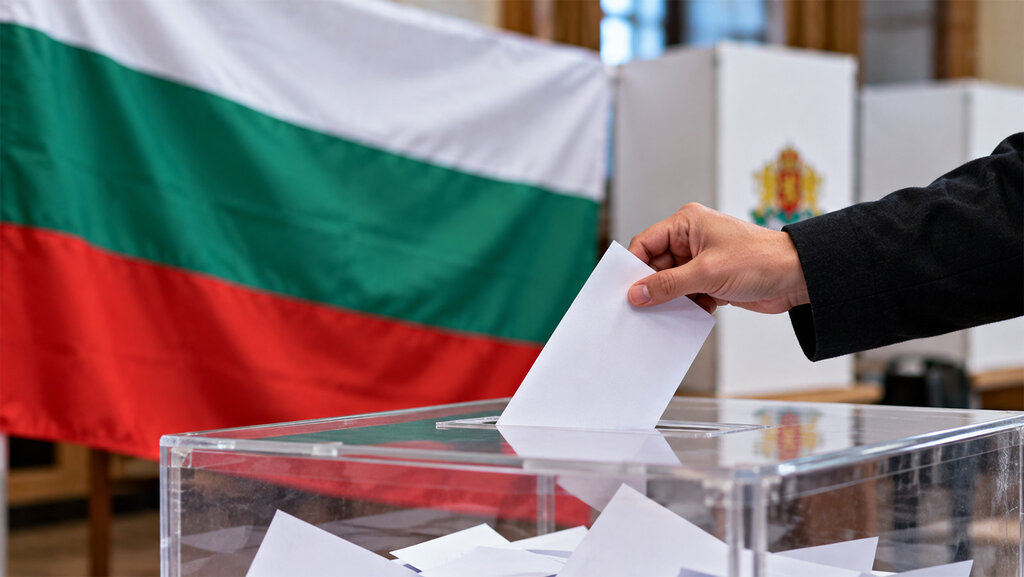
PHOTO cereport.eu
“We’re only just beginning to analyse this, amid speculation about whom the DPS supported,” says Parvan Simeonov. “The exit poll data clearly show that more DPS supporters voted in the second round than in the first. “The exit poll data clearly show that more DPS supporters voted in the second round than in the first — around 100,000, compared with around 50,000. In the first round, they tended to back Iotova, but in the run-off their support shifted towards Gyurov. So something happened between the two rounds. The vote in Türkiye is not surprising, as it follows the same pattern.
“At the same time, there is speculation about the extent to which the DPS actively mobilised its supporters. I think there are signs that can help us judge this. In recent months, I do not recall seeing particularly high poll ratings for the DPS. Support has consistently hovered around 4%, which means the party can secure roughly 100,000 votes in an election without activating its networks. So the question is whether this was one of the DPS’s more substantial mobilisation efforts.”
“Why did they lean towards Gyurov? Probably because those in power appeared to be pitted against almost all the opposition parties except Vazrazhdane. The voter profiles published by Myara clearly show that DPS supporters favoured Gyurov. Their support was not as strong as that of GERB voters, but there were fairly clear signs of mobilisation and a shift in this group’s vote. In the first round, people probably voted simply from the heart. In the run-off, they again followed their hearts, but with greater party loyalty and discipline.”
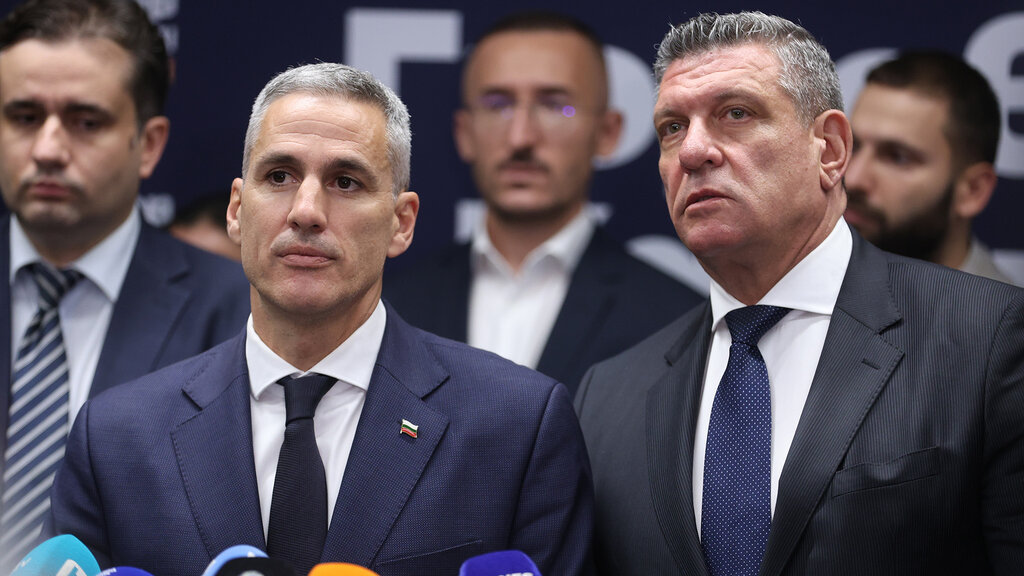
Andrey Gyurov and Georgi Kandev
PHOTO BTA
The support Gyurov and Kandev received from more than 750,000 voters represents substantial political capital, the sociologist says. In addition to supporters of the We Continue the Change–Democratic Bulgaria coalition, which backed Gyurov’s presidential bid, they attracted a significant personal vote and a protest vote. “Do not forget that nearly 250,000 votes came from GERB and the DPS,” Simeonov points out.
It remains to be seen whether support for We Continue the Change and Democratic Bulgaria is growing enough to put them on a par with GERB, which would represent a gain in electoral strength for the two parties. Beyond the numbers, this offers an opportunity for new leadership and closer ties that could help bridge differences between parties on the right and bring them closer together. Parvan Simeonov believes these are developments to watch.
Prime Minister Rumen Radev’s party currently enjoys a degree of political comfort not seen in Bulgaria for a long time, with a parliamentary majority and a supportive presidency. Could President Iliana Iotova assert her independence from the government despite the strong backing she received from Progressive Bulgaria during the election campaign? Under what circumstances might she become a critic of those in power?
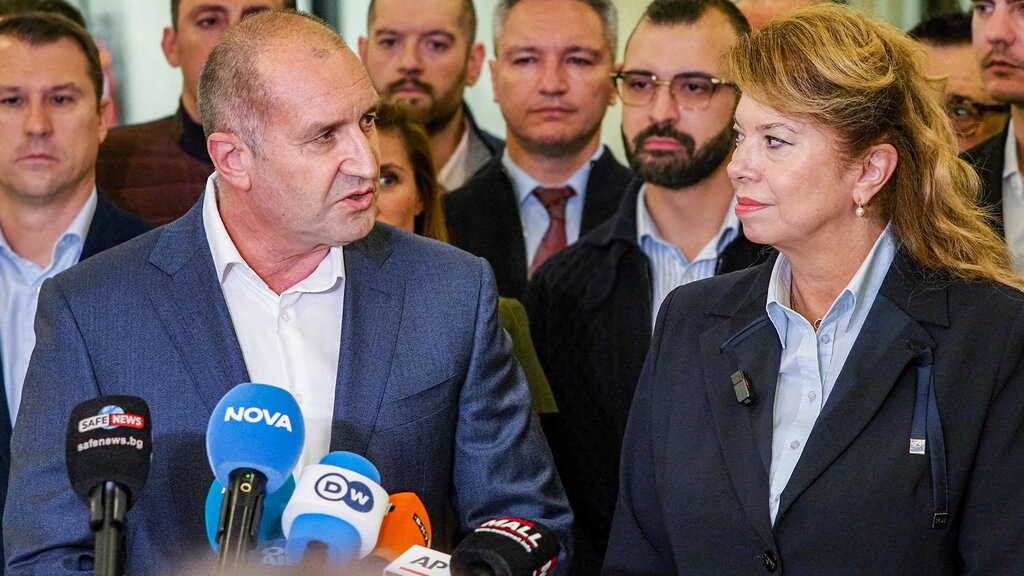
Rumen Radev and Iliana Iotova
PHOTO BGNES
“Experience shows that this often happens. We remember that President Rosen Plevneliev was not on the best of terms with Prime Minister Boyko Borisov, nor was Georgi Parvanov with the then prime minister, Sergey Stanishev. Zhelyu Zhelev also had strained relations at times with the Union of Democratic Forces, which had backed his presidency.
“I think the conditions for this exist and are built into the constitution, because the president’s direct election gives the office a particularly strong democratic mandate and positions its holder to act as a voice of the people in opposition to those in power.
“So I would not rule out that possibility, although I see no signs of it at present. In any event, we will find out soon, because both sides expressed expectations of each other several times during the campaign. Rumen Radev’s relatively late personal involvement in the campaign, and that of Progressive Bulgaria, may hint at some tensions, but I think it is too early for such speculation.”
Further reading:
- Controlled voting and divisions remain challenges for Bulgaria
- What do Bulgarians abroad expect from the country’s seventh president?
- Where is the disconnect between Bulgarians and Presidential elections?
Editor: Elena Karkalanova
This publication was created by: Elizabeth Radkova